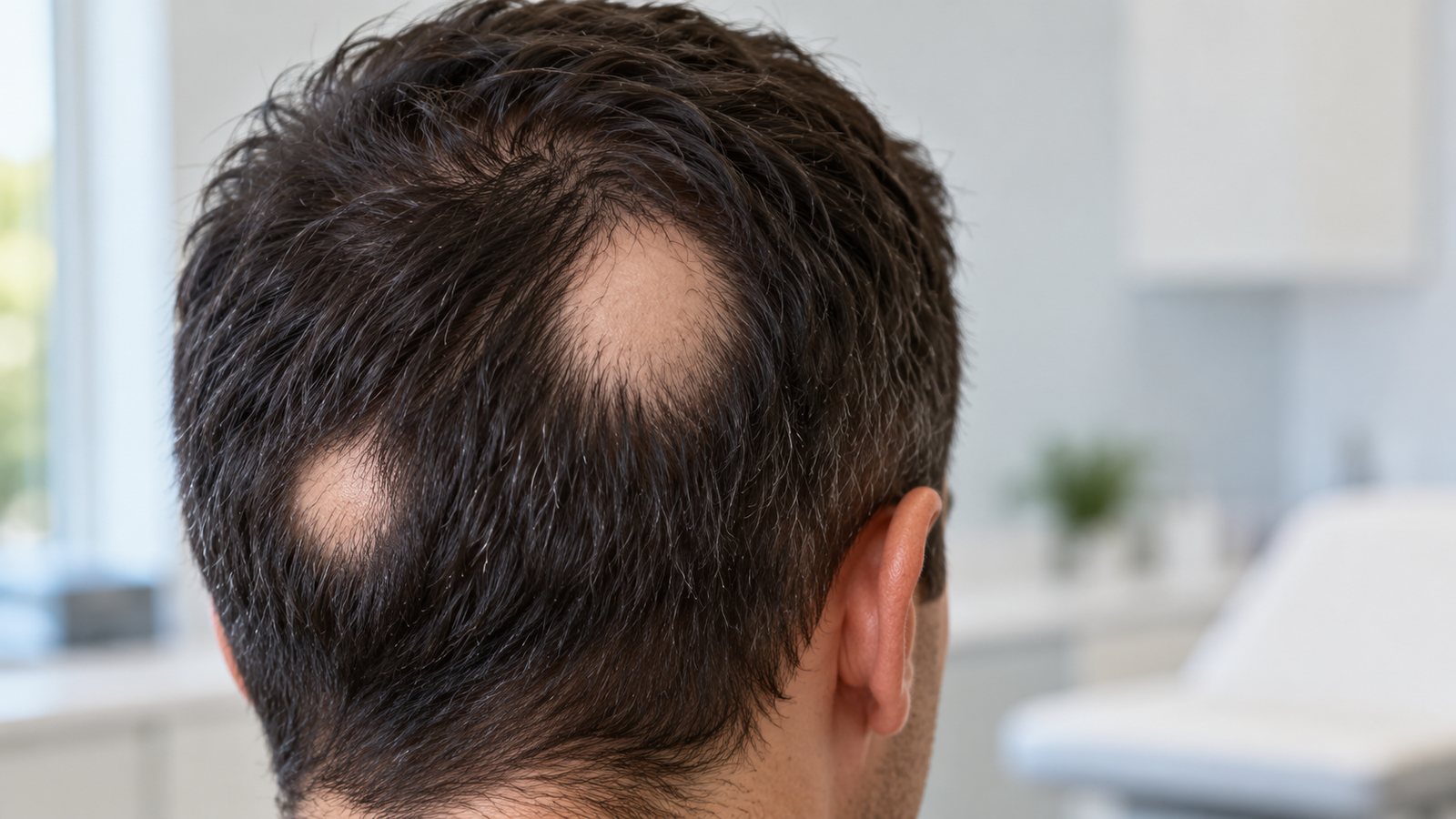
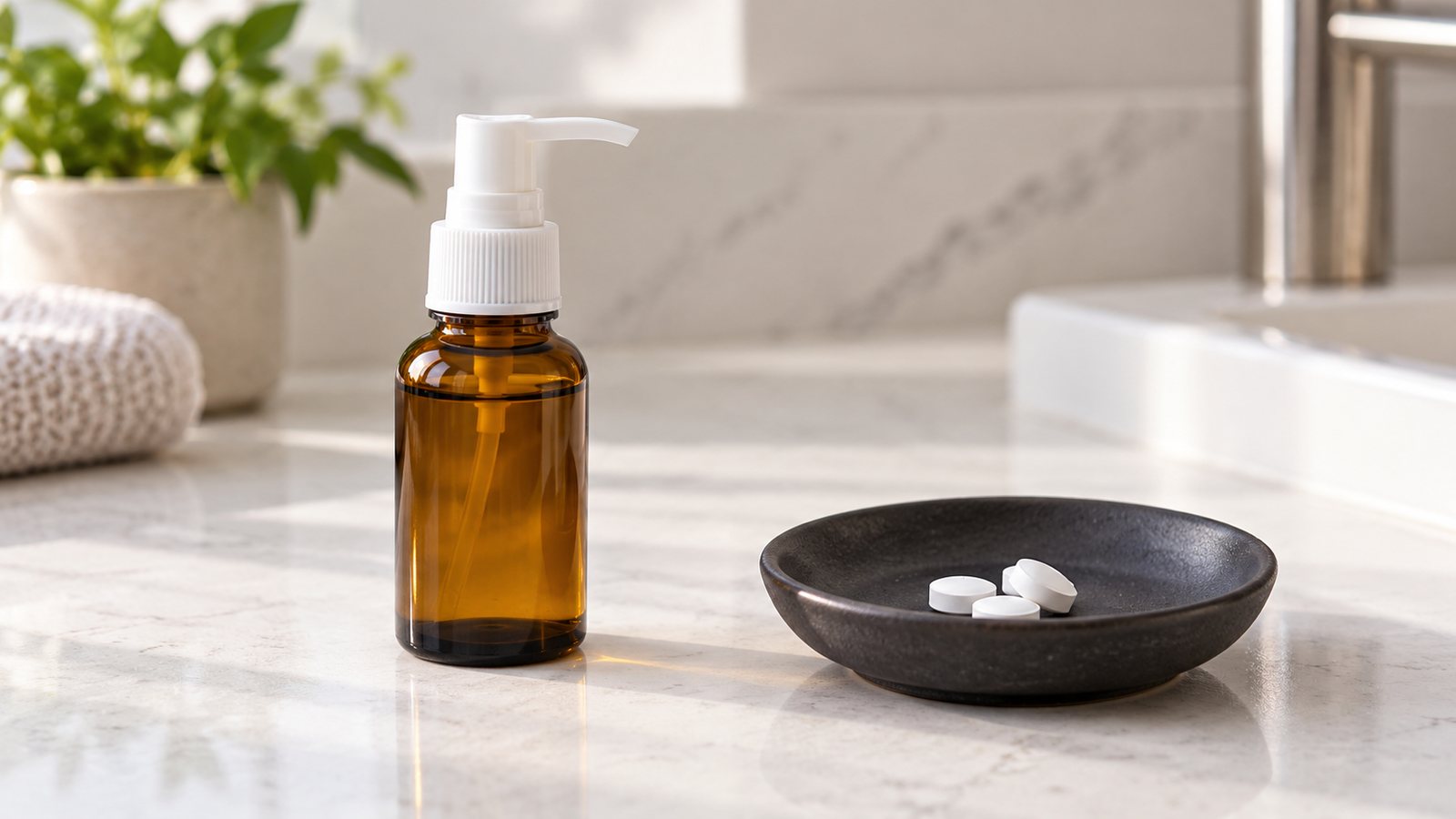
5mg Finasteride vs 1mg: What the Dose Difference Means for Hair Loss
5mg finasteride is the usual NHS once-a-day dose for an enlarged prostate. That is five times the 1mg dose the NHS lists for hair loss, and the only 5mg hair study cited here followed 40 postmenopausal women for 18 months.
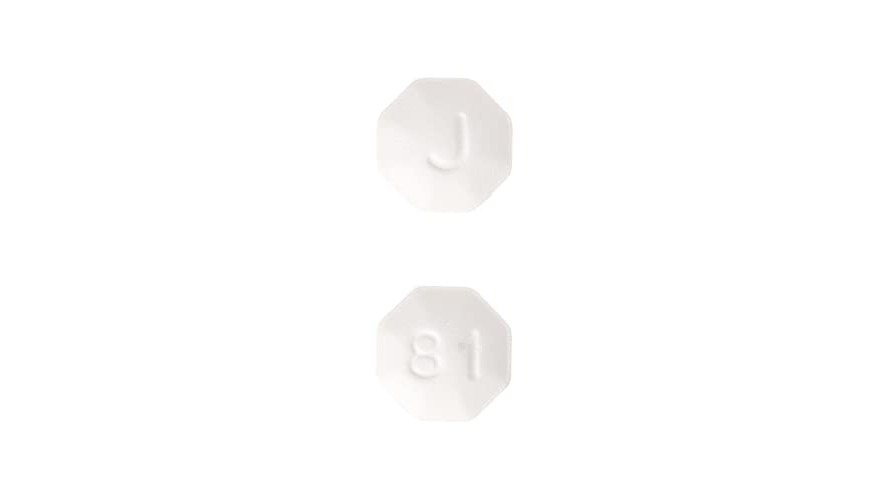
The NHS sets 1mg once a day as the usual dose for hair loss. A 5mg tablet holds five times that, and the NHS says not to break or crush it, so it can’t be split into smaller doses. These sources give the two strengths different listed uses, but none shows that 5mg works better than 1mg for hair loss.
5mg Finasteride Is the Usual Prostate Dose of a Drug That Blocks a Male Hormone
MedlinePlus puts finasteride in a group of medicines called 5-alpha reductase inhibitors. It says the drug blocks the body’s production of a male hormone that makes the prostate grow. In the scalp, it blocks a male hormone that holds back hair growth.
Writing about hair loss usually calls that hormone dihydrotestosterone (DHT).
For plant products sold on the same idea, see herbs for blocking DHT compared with finasteride.
5mg vs 1mg: Five Times the Milligrams, Two Listed Uses
Using the NHS doses, 5mg ÷ 1mg = 5, so a 5mg tablet holds five times the milligrams of a 1mg tablet.
| Point | 5mg | 1mg | Source |
|---|---|---|---|
| Usual listed use | Enlarged prostate, once a day | Hair loss, once a day | NHS |
| Brand name | Proscar | Propecia | Drugs.com |
| FDA approval | Proscar, 19 June 1992, for an enlarged prostate | Propecia, 19 December 1997, for male pattern hair loss in men | Drugs.com |
| Milligrams vs the other | 5 ÷ 1 = 5 times | 1 ÷ 5 = one-fifth | Worked out from the NHS doses |
| Hair-loss evidence cited here | One study: 40 postmenopausal women, 18 months | Hair loss in men (androgenetic alopecia): hair growth and hair count over time | PMC study, Drugs.com |
| Common side effects listed | Sexual effects, plus breast enlargement, breast tenderness and rash | Sexual effects such as lower sex drive | Drugs.com |
Three rules apply to both strengths.
| Rule for both strengths | What it means for 5mg | Source |
|---|---|---|
| Prescription only | Taking 5mg for hair is a prescriber’s decision | Drugs.com |
| Women who are or may become pregnant must not touch broken or crushed tablets | This applies to anyone in the home who handles the tablets. Drugs.com says the drug can be absorbed through the skin and can cause birth defects if a woman is exposed to it during pregnancy | MedlinePlus, Drugs.com |
| Never for a woman or a child | This conflicts with the 40-woman study and the American Academy of Dermatology (AAD) listing | Drugs.com, AAD |
Put together, the tables show that 5mg is labelled for the prostate. Its hair-loss data here comes from women, a group that one source says should never take the drug.
Verdict: 5mg Is the Prostate Dose, and Its Hair Data Is One Small Study
- Verdict: 5mg finasteride is the usual NHS dose for an enlarged prostate, and 1mg is the usual hair-loss dose. None of these sources shows that 5mg works better than 1mg for hair loss.
- The flaw, with its fix: the 5mg hair data here is one study of 40 postmenopausal women, scored by the women’s own ratings and by photos. Don’t apply it to men or younger women. If 5mg comes up for your hair, ask the prescriber what evidence they are relying on.
- Strengths: both doses are taken once a day. The 1mg dose (Propecia) has been FDA-approved for male pattern hair loss in men since 19 December 1997, per Drugs.com.
- Who should skip: anyone planning to move from 1mg to 5mg on their own. Use the listed 1mg dose through a prescriber. For women, a dermatologist can go through the options the AAD lists.
34 of 40 Postmenopausal Women Rated Themselves Improved on 5mg
In one small study, most women rated their hair as better after 6 months on 5mg a day. Every woman took 5mg, so the study has no 1mg group to compare against.
The PMC-published study enrolled 40 postmenopausal women with androgenetic alopecia (pattern hair loss). All were normoandrogenic, which means their male-hormone levels were normal. They took oral finasteride 5mg a day for 18 months. The researchers measured results in two ways: how satisfied the women were, and an overall judgement of change from photos (global photograph assessment).
At 6 months, 34 of 40 women (85%) rated themselves improved. On the photos, 32 of 40 (80%) looked improved. Older women responded less well than younger ones.
The authors write that “efficacy of finasteride in women is controversial”. Efficacy here means how well it works. The sources also disagree about women taking it at all. The AAD lists finasteride, flutamide and dutasteride as other medicines a dermatologist may prescribe for female pattern hair loss.
Drugs.com says finasteride should never be taken by a woman or a child. MedlinePlus describes it as only for use in men.
These positions don’t agree, and the study included only postmenopausal women. To see how the two main options compare for women, read Women’s Hair Loss: Minoxidil or Finasteride?
Whole Tablets, a 6-Hour Missed-Dose Rule, and No Stopping Alone
The NHS gives three rules for daily use:
- Swallow each tablet whole with water. Never break or crush it.
- If you forget a dose and it’s less than 6 hours since it was due, take it as soon as you remember. If more than 6 hours have passed, skip it and take the next one at the usual time.
- Don’t stop taking finasteride without talking to your doctor first.
Side Effects: The 5mg List Adds Breast Changes and Rash
Drugs.com lists sexual side effects for both strengths, such as lower sex drive and erection problems. It says these sexual side effects may continue after you stop taking the medicine. Its list for 5mg adds breast enlargement, breast tenderness and rash.
In the women’s study, 4 of 40 reported a lasting drop in sex drive. One woman had raised liver enzymes.
Here are four questions worth bringing to a doctor or dermatologist, with what the sources already say:
- Why this strength? The NHS lists 5mg for an enlarged prostate and 1mg for hair loss.
- What evidence supports 5mg for my hair? In these sources, one study of 40 postmenopausal women.
- When will I know if it’s working? MedlinePlus says to allow at least 3 months for any change and to judge it at 12 months.
- What happens if I stop? MedlinePlus says hair regrown on the drug is likely to be lost within 12 months of stopping. The NHS says hair loss will usually come back.
Next step: If you are choosing between the two main hair-loss medicines, read Minoxidil vs Finasteride for Men.
FAQ
Do I Need a Prescription for Finasteride?
Yes. Drugs.com says finasteride is only available as a prescription medicine. That applies to the 1mg and the 5mg tablets alike.
Does Finasteride Really Regrow Hair?
For men, Drugs.com says the tablets help improve hair growth and hair count over time. MedlinePlus says changes take at least 3 months, and regrown hair is likely to be lost within 12 months of stopping. None of these sources promises regrowth for any one person.
What Does Finasteride Do to the Female Body?
Drugs.com warns that it can be absorbed through the skin and can cause birth defects if a woman is exposed to it during pregnancy. It says women should never take it. In the 18-month study of postmenopausal women on 5mg, 4 of 40 reported a lasting drop in sex drive. One woman had raised liver enzymes.
When to See a Dermatologist
See a dermatologist before starting either strength, and if someone suggests 5mg for your hair. Women have an extra reason. The AAD describes finasteride for female pattern hair loss as something a dermatologist may prescribe. Go back if side effects appear or if nothing has changed by 12 months.
Talk to your doctor before you stop, as the NHS advises.
Not medical advice: This page summarises NHS, MedlinePlus, Drugs.com, AAD and PMC material for general information only. It does not replace advice from a doctor or dermatologist about your own hair loss or medicines.