Patchy or Extensive Alopecia Areata? The Hair Loss Treatment That Fits
Limited patches point to steroid injections or steroid creams, per NAAF, while extensive loss at age 12 or older can bring a JAK inhibitor pill into the discussion, per the AAD. Results can take 3 to 5 months to show.
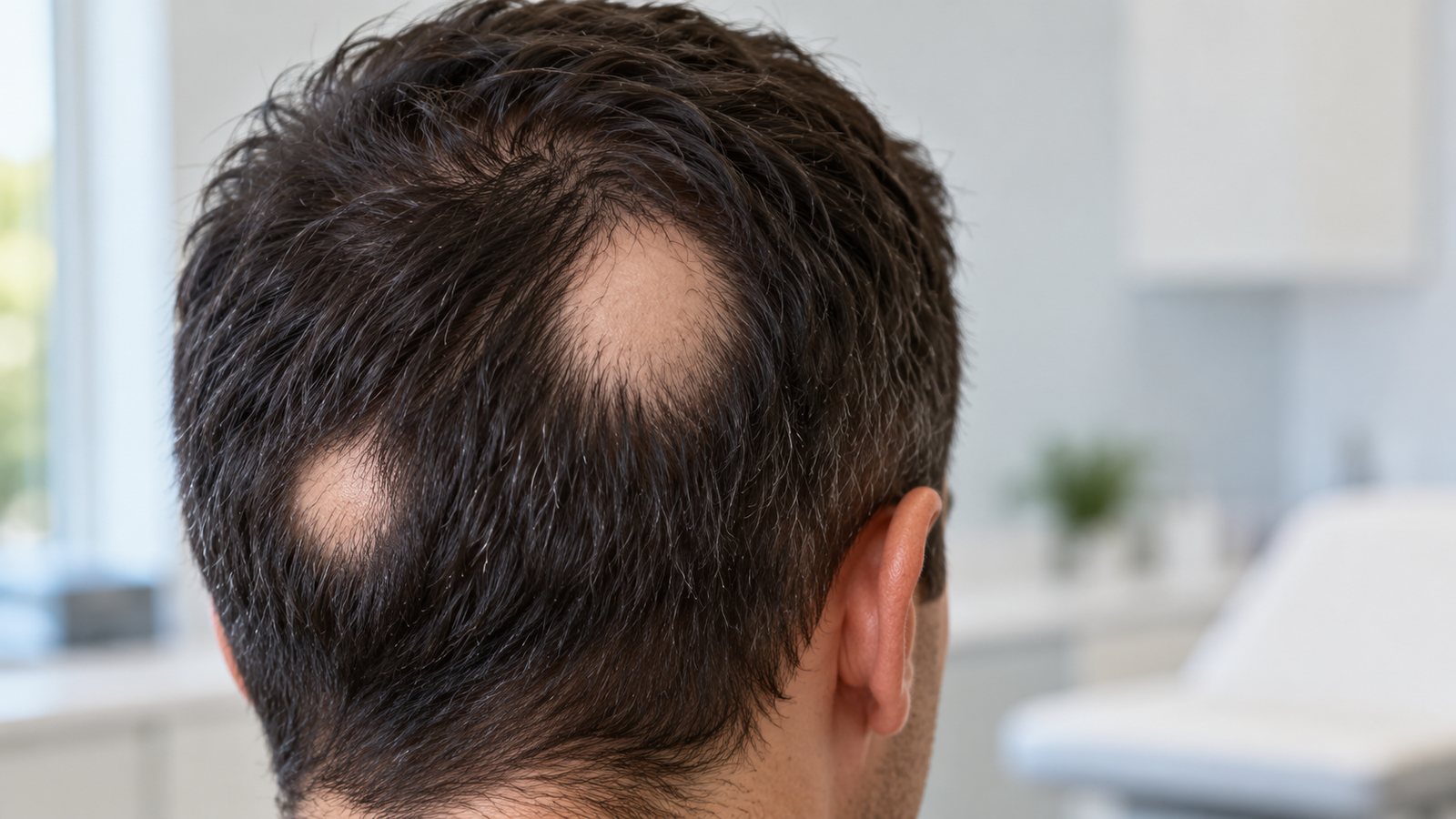
Two things steer which hair loss alopecia areata treatment a dermatologist is likely to offer: how much of your scalp is bare, and your age. The National Alopecia Areata Foundation (NAAF) lists three more: the form of your hair loss, what you have tried already, and whether you have an allergic condition such as eczema.
For limited patches, NAAF names steroid shots into the patch and steroid creams. For extensive hair loss at age 12 or older, the American Academy of Dermatology (AAD) says an approved Janus kinase (JAK) inhibitor may be considered. A JAK inhibitor is a once-a-day pill that calms the immune cells behind the hair loss.
No option promises regrowth. Mayo Clinic Press says results can take 3 to 5 months to show. About 1 in 10 people may need long-term treatment, it adds.
Verdict: For patches, NAAF says adults are most often offered steroid shots, and Mayo Clinic Press names a steroid cream for children under 10. For extensive loss at age 12 or older, ask about a JAK pill and its warnings.
The real flaw, and its fix: Steroid shots can take 3 to 4 months to show whether they worked, per Mayo Clinic Press. The fix is a set checkpoint: if no regrowth shows by 6 months, NAAF says your physician will likely stop the shots, so you know when to change course.
Strengths: Steroid shots may show first regrowth within 6 to 8 weeks, per NAAF. For severe cases, the U.S. Food and Drug Administration (FDA) has approved three drugs, per NAAF.
Who should skip what: Under 12, skip the JAK pill question, since the JAK pill the AAD describes is approved from age 12.
See a dermatologist first. Patchy hair loss has more than one possible cause. A dermatologist can confirm the type of loss and how far it reaches before you choose an option.
Alopecia Areata Is the Immune System Attacking Hair Follicles
Cleveland Clinic describes alopecia areata as an autoimmune disease that attacks the hair follicles and causes patchy hair loss. Autoimmune means the immune system targets the body’s own tissue, so the medicines below aim at that response.
Age limits come up often for a reason: Cleveland Clinic says about 1 in 5 cases involve children.
Extent of Loss Picks the Option; Age Sets the Limits
Dermatologists put a number on extent. The Severity of Alopecia Tool (SALT) score measures scalp hair loss on a scale from 0 to 100, according to NAAF. The sources here give no SALT cut-off for “severe”, so ask your dermatologist where your score falls. Age matters because each JAK pill is approved only for certain ages.
The table shows which option each source links to each situation, and what that source adds about timing or risk.
| Extent and age | Options the sources name | What the source adds | Sources |
|---|---|---|---|
| Limited patches | Steroid shots into the patch; steroid creams | First regrowth may show in 6–8 weeks; shots repeat every 4–6 weeks; a physician will likely stop if none by 6 months | NAAF |
| Child under 10 | Steroid cream on the bald spot | In children, cream rather than shots has been the preferred method; more research is needed | Mayo Clinic Press |
| Moderate loss | Steroid creams, with or without minoxidil; pulse steroids; a JAK pill in some cases | Pulse steroids appear to have fewer side effects than other oral steroids | NAAF |
| More extensive loss | Topical immunotherapy | Generally used for more extensive alopecia areata | NAAF |
| Extensive loss | Topical minoxidil | Generally not effective on its own | NAAF |
| Extensive loss, age 12 and older | JAK inhibitor pill: ritlecitinib (Litfulo) from 12; baricitinib (Olumiant) for adults | Warnings include serious infections, blood clots, stroke, heart attack and cancer | AAD, Mayo Clinic Press |
The far end of the scale is rare. Cleveland Clinic puts alopecia totalis (loss of all scalp hair) at about 5% of people with alopecia areata. It puts alopecia universalis (loss of all body hair) at about 1%.
Steroid Shots: First Regrowth at 6 to 8 Weeks, a Clear Answer at 3 to 4 Months
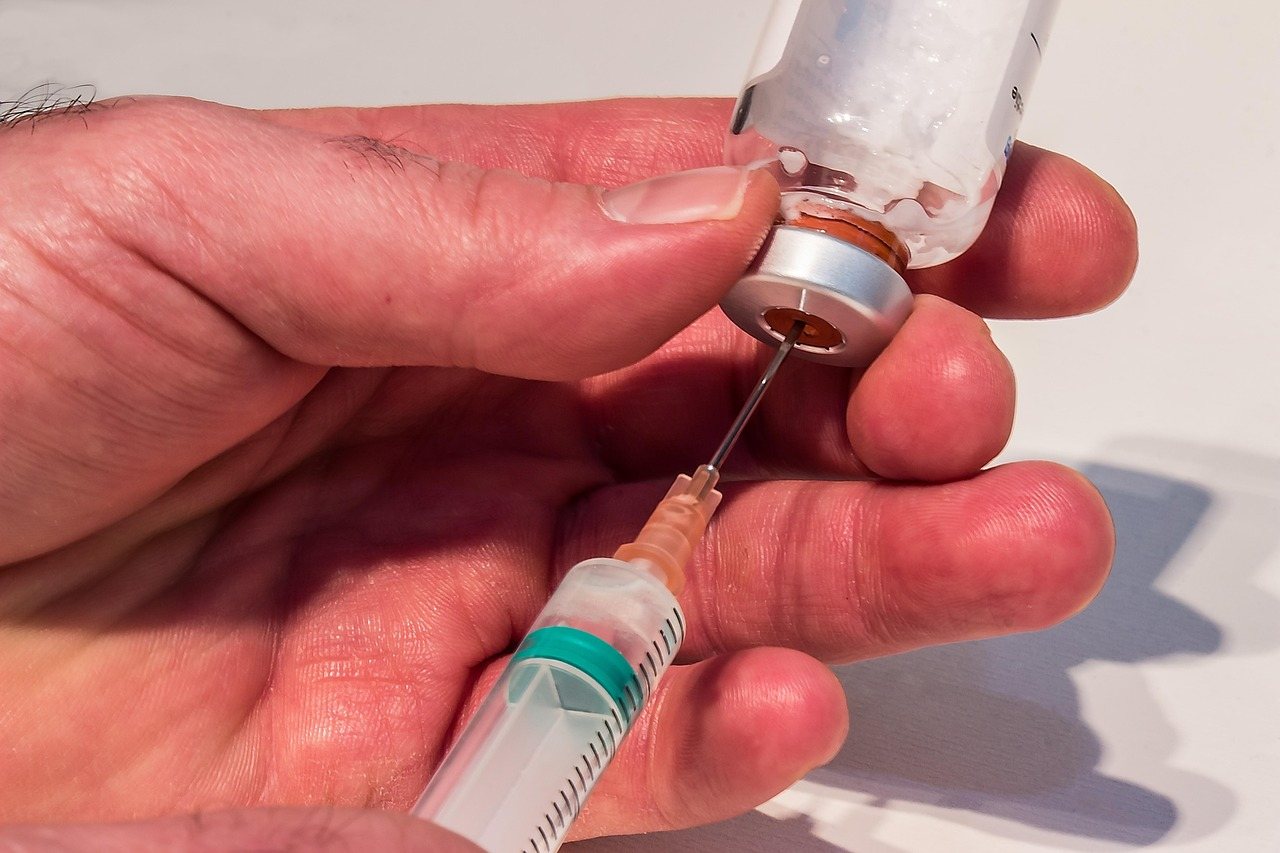
Steroid shots go straight into the bald patch, and doctors call them intralesional injections. NAAF says first regrowth may show within 6 to 8 weeks. Mayo Clinic Press says it can take 3 to 4 months to know whether the shots worked.
NAAF says shots repeat every 4 to 6 weeks. If nothing has regrown by 6 months, it says your physician will likely stop treatment.
That checkpoint means about 5 to 7 rounds of shots. Count the first round as week 0. Six months is about 26 weeks. A 6-week gap then gives 5 rounds, at weeks 0, 6, 12, 18 and 24. A 4-week gap gives 7 rounds, from week 0 to week 24.
Shots have limits. NAAF says they don’t prevent further hair loss and can leave temporary dents, called dells. Mayo Clinic Press adds tenderness, scalp atrophy (a dent in the skin that usually fades) and lighter patches of skin.
Creams Fit Children, Immunotherapy Fits Wider Loss, Minoxidil Is Mostly an Add-On
Steroid creams, spread on the skin, are the other option NAAF names for limited patches. For children under 10, Mayo Clinic Press names steroid cream.
For moderate loss, NAAF adds pulse steroids (high doses at set intervals, usually by mouth). It says a JAK pill may be recommended in some moderate cases too.
Topical immunotherapy means putting a substance on the scalp that sets off a deliberate skin reaction. NAAF says it is generally used for more extensive alopecia areata.
Minoxidil comes as a topical product and as a tablet, per NAAF. Topical minoxidil is generally not effective on its own for extensive loss. Oral minoxidil is most often used alongside other treatments, such as steroid shots or JAK pills.
For dosing and side effects, see starting the minoxidil pill and does minoxidil work.
Three FDA-Approved Drugs Exist for Severe Loss, With Serious Warnings
JAK inhibitors block some of the chemical signals immune cells use to switch on. Those signals are part of the immune attack on the follicles.
NAAF reports that the FDA has approved three drugs for severe alopecia areata. The sources here name two of them. Yale Medicine covers baricitinib (Olumiant), approved for adults in 2022. The second, ritlecitinib (Litfulo), was approved in June 2023 for people 12 and older.
The AAD says an approved JAK inhibitor may be considered for patients 12 and older with extensive hair loss. The risks are real. Mayo Clinic Press lists warnings for these pills that include serious infections, blood clots, stroke, heart attack and cancer.
Seven Questions That Make a Dermatologist Visit Count
- What is my SALT score today, out of 100, and will you re-score it at each visit?
- Is my loss limited enough for steroid shots or cream, or extensive enough for immunotherapy or a JAK pill?
- If we start shots and nothing regrows by 6 months, will we stop, as NAAF says physicians likely will?
- For a child: does steroid cream fit under age 10, and when could a JAK pill be considered from 12?
- If a JAK pill is on the table, how will we watch for infections, blood clots, stroke, heart attack and cancer?
- Would minoxidil add anything, given NAAF says topical minoxidil alone generally falls short on extensive loss?
- If I am among the roughly 1 in 10 who may need long-term treatment, what does that plan look like?
Next step: Compare the evidence and monthly costs for each option in hair loss treatments compared.
Alopecia Areata Treatment FAQ
How long does alopecia areata treatment take to show results?
NAAF says steroid shots may show first regrowth within 6 to 8 weeks. Mayo Clinic Press says it can take 3 to 4 months to know whether the shots worked.
Can teenagers take a JAK inhibitor for alopecia areata?
The AAD says an approved JAK inhibitor may be considered from age 12 when loss is extensive. Ritlecitinib is approved from age 12, while baricitinib is approved for adults.
Does minoxidil work for alopecia areata?
NAAF says topical minoxidil is generally not effective on its own for extensive loss. Ask your dermatologist whether it fits alongside another option.
This page summarizes public health sources and published guidance. It is not medical advice. See a dermatologist when a bald patch first appears or your hair loss changes, and before you start or stop any medicine named here.
Sources
- https://www.naaf.org/navigation-toolkit/available-treatments/
- https://my.clevelandclinic.org/health/diseases/12423-alopecia-areata
- https://www.aad.org/public/diseases/hair-loss/types/alopecia/treatment
- https://health.ucdavis.edu/dermatology/specialties/medical/hair.html
- https://www.yalemedicine.org/news/new-alopecia-areata-treatment-helps-adults-and-adolescents
- https://mcpress.mayoclinic.org/living-well/how-is-alopecia-areata-treated/