Starting the Minoxidil Pill? Here's the Dose Nurx Gives You First
Nurx starts the pill at 0.625 mg a day, which is a quarter of a 2.5 mg tablet, and may raise it to 1.25 mg after 10 weeks without side effects. A published review puts the usual ceiling at 5 mg a day and names extra body hair and heart-related symptoms as the common side effects.
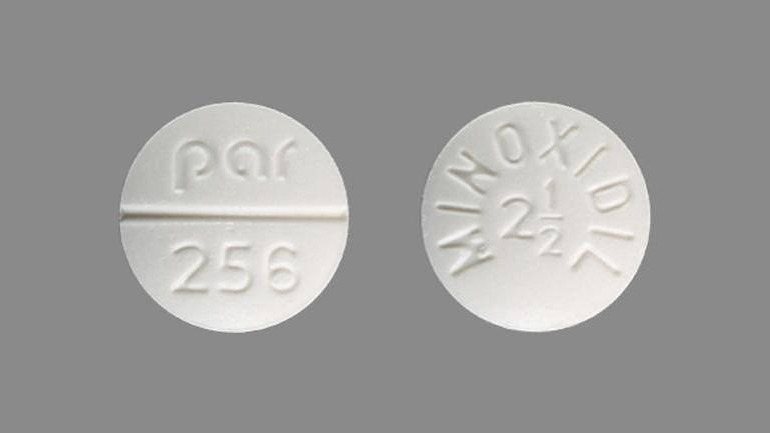
Nurx tells new patients to break each 2.5 mg tablet into quarters and take one 0.625 mg piece a day. At that rate, one tablet of the minoxidil pill lasts four days. That is one telehealth provider’s schedule, and other sources start elsewhere. Two published reviews report wider ranges, with lower ones for women than for men.
Report these right away: Nurx’s page lists lightheadedness, dizziness, and a racing or irregular heartbeat. It also lists new or worsening chest, arm or shoulder pain, shortness of breath, rapid weight gain, and swelling in the hands, legs or feet. New body hair is the other common side effect. Raise it at your next visit.
Nurx’s 0.625 mg Start Is in Both Women’s Ranges and Below Both Men’s
Nurx’s plan has one written step. After 10 weeks with no side effects, Nurx says the provider may raise the dose to half a 2.5 mg tablet, which is 1.25 mg a day. Two reviews of low-dose oral minoxidil (LDOM) give separate ranges for men and women. One gives starting doses, and the other gives usual doses:
| Source | Dose type | Men (mg/day) | Women (mg/day) | Note |
|---|---|---|---|---|
| Nurx’s dosing page | Start, then week-10 step | 0.625, then 1.25 | 0.625, then 1.25 | One plan, not split by sex |
| Comprehensive LDOM review | Starting dose | 1–5 | 0.5–1 | Maximum generally 5 mg/day |
| Patterned hair loss review | Usual dose | 2.5–5 | 0.25–1.25 | Ranges for patterned hair loss |
Side by side, Nurx’s 0.625 mg falls inside both women’s ranges. It sits below the men’s starting range in the comprehensive review and below the men’s usual range in the patterned hair loss review. If you are a man offered a quarter tablet, ask which range your prescriber is working from.
In tablets, 30 days at 0.625 mg use 30 ÷ 4 = 7.5 tablets of 2.5 mg. At 1.25 mg a day, the same 30 days use 30 ÷ 2 = 15 tablets.
The Minoxidil Pill Is a Blood Pressure Drug Taken at Low Doses for Hair Loss
Mayo Clinic places oral minoxidil in the antihypertensive class of medicines, used for high blood pressure. It is the same drug as the liquid or foam. You swallow it instead of putting it on your scalp.
The International Society of Hair Restoration Surgery (ISHRS) presents the pill as an option for people who had trouble with the topical form. It names “itching, scaling, altered hair texture, or difficulties in hairstyling”. With a tablet, nothing goes on your scalp or hair.
If you have not tried the topical form yet, see what topical minoxidil costs each month and what the evidence says.
Side Effects: Extra Body Hair and Heart-Related Symptoms
The comprehensive review names two common side effects. One is hypertrichosis, meaning extra body hair. The other is cardiovascular (heart and blood vessel) symptoms.
Nurx’s page adds “a rare chance of pericardial effusion,” which is fluid building up around the heart. The review lists it apart from those two dose-dependent effects, as an idiosyncratic (type B) side effect.
Women Are More Likely Than Men to Get Unwanted Body Hair
The review states that “Females are more prone to hypertrichosis than males.” In both reviews, the women’s ranges stop at 1 mg or 1.25 mg a day, while the men’s ranges run higher (table above). If new facial or body hair appears, ask whether your dose can stay at the low end.
On the benefit side, ISHRS reports that 1 mg of oral minoxidil matched 5% topical minoxidil in women. If your thinning centers on your part, the American Academy of Dermatology (AAD) page on female pattern hair loss describes how it usually looks.
Timeline: Dose Steps and Side-Effect Windows From the Sources
These steps show dose changes and what to watch for. They do not say when hair should improve.
- Day 1: Nurx’s start is 0.625 mg a day = 2.5 mg ÷ 4, per Nurx’s dosing page. One tablet covers 4 days.
- Any week: Watch for the symptoms in the box at the top and for new body hair. The box says how fast to raise each one.
- First 3–6 weeks: Nurx lists increased scalp shedding “for the first 3-6 weeks,” so it can start on day 1. Note how long it lasts and raise it at your follow-up.
- Week 10 (day 70): If you have had no side effects, Nurx’s provider may move you to 1.25 mg a day = 2.5 mg ÷ 2. That is double the start. The first 70 days use 70 ÷ 4 = 17.5 tablets.
- Any later raise: Each one is the prescriber’s call, up to the review’s general ceiling of 5 mg/day. That ceiling is 8 × the start (5 ÷ 0.625) and 4 × the week-10 dose (5 ÷ 1.25).
- Long term: The review says you may stay on the pill long term if the outcome is satisfactory. Nurx says you have to keep taking it, or hair loss will begin again.
For the early shed in step 3, see whether your hair fall is the normal early shed.
Verdict: An Off-Label Pill You Take Long Term, With a Prescriber
Verdict: The minoxidil pill is a low-dose tablet for pattern hair loss, presented by ISHRS as an option after the topical form caused trouble.
The flaw, and its fix: It is not approved by the US Food and Drug Administration (FDA) for hair loss, per ISHRS and the comprehensive review. Step 6 shows it has no set end date. The fix is a prescriber who sets each dose, checks in before any raise, and agrees with you how long to try it.
Strengths: Swallowing a tablet skips scalp application, and with it the itching and scaling ISHRS links to the topical form. The patterned hair loss review lists cost savings over the topical form and the option to keep using other topicals, including camouflage products. ISHRS adds that a tablet suits people who wear hair pieces or use keratin fibers. It can also be combined with finasteride, dutasteride or a hair transplant. In women, 1 mg matched the topical form (above).
Check with your doctor first if any of these apply. Mayo Clinic says to tell your doctor about medical problems that can affect use, including:
- angina (chest pain caused by the heart)
- a recent heart attack or stroke
- heart or blood vessel disease
- kidney disease
- pheochromocytoma, a rare tumor of the adrenal gland
Who should skip: anyone currently taking guanethidine. Nurx says minoxidil tablets are “contraindicated,” or ruled out, for those patients. If that is you, or your doctor rules the pill out after reviewing a condition above, ask a dermatologist about topical minoxidil or, for men, finasteride 1 mg for thinning hair.
How We Evaluated
Doses come from Nurx’s dosing page and two reviews on PubMed Central, the US National Library of Medicine’s free archive of medical papers. Side effects come from the comprehensive review and Nurx. The conditions to flag come from Mayo Clinic, and the benefits from ISHRS and the patterned hair loss review. We did the timeline and tablet arithmetic ourselves, using those figures.
Next step: Before your first appointment, read what doctors and studies report about oral minoxidil side effects.
FAQ: Can Minoxidil Pills Be Used for Hair Loss?
Can minoxidil pills be used for hair loss? Yes, at low doses. The comprehensive review covers its use for alopecia, the medical word for hair loss. The verdict above covers its approval status.
Is 0.625 mg the dose everyone starts on? No. The dose table above sets it against each review’s ranges.
How long would I take it? There is no set end date (timeline step 6). Agree on a trial length with your prescriber before you start.
See a Dermatologist Before Starting and Report Heart Symptoms Right Away
Hair loss has more than one cause, so see a dermatologist before the first tablet. The AAD page on hair loss treatment explains what that visit covers.
Go back sooner if:
- Any symptom in the box at the top appears.
- Shedding goes on past the first 3–6 weeks Nurx describes.
- New facial or body hair bothers you.
- You have any condition on Mayo Clinic’s list.
This page sums up published sources for general information. It is not medical advice, and your prescriber sets your dose.
Sources
- https://www.mayoclinic.org/drugs-supplements/minoxidil-oral-route/description/drg-20068757
- https://www.nurx.com/oral-minoxidil/
- https://pmc.ncbi.nlm.nih.gov/articles/PMC10806356/
- https://ishrs.org/oral-minoxidil-for-hair-loss/
- https://pmc.ncbi.nlm.nih.gov/articles/PMC9650732/
- https://www.aad.org/public/diseases/hair-loss/types/female-pattern
- https://www.aad.org/public/diseases/hair-loss/treatment/diagnosis-treat