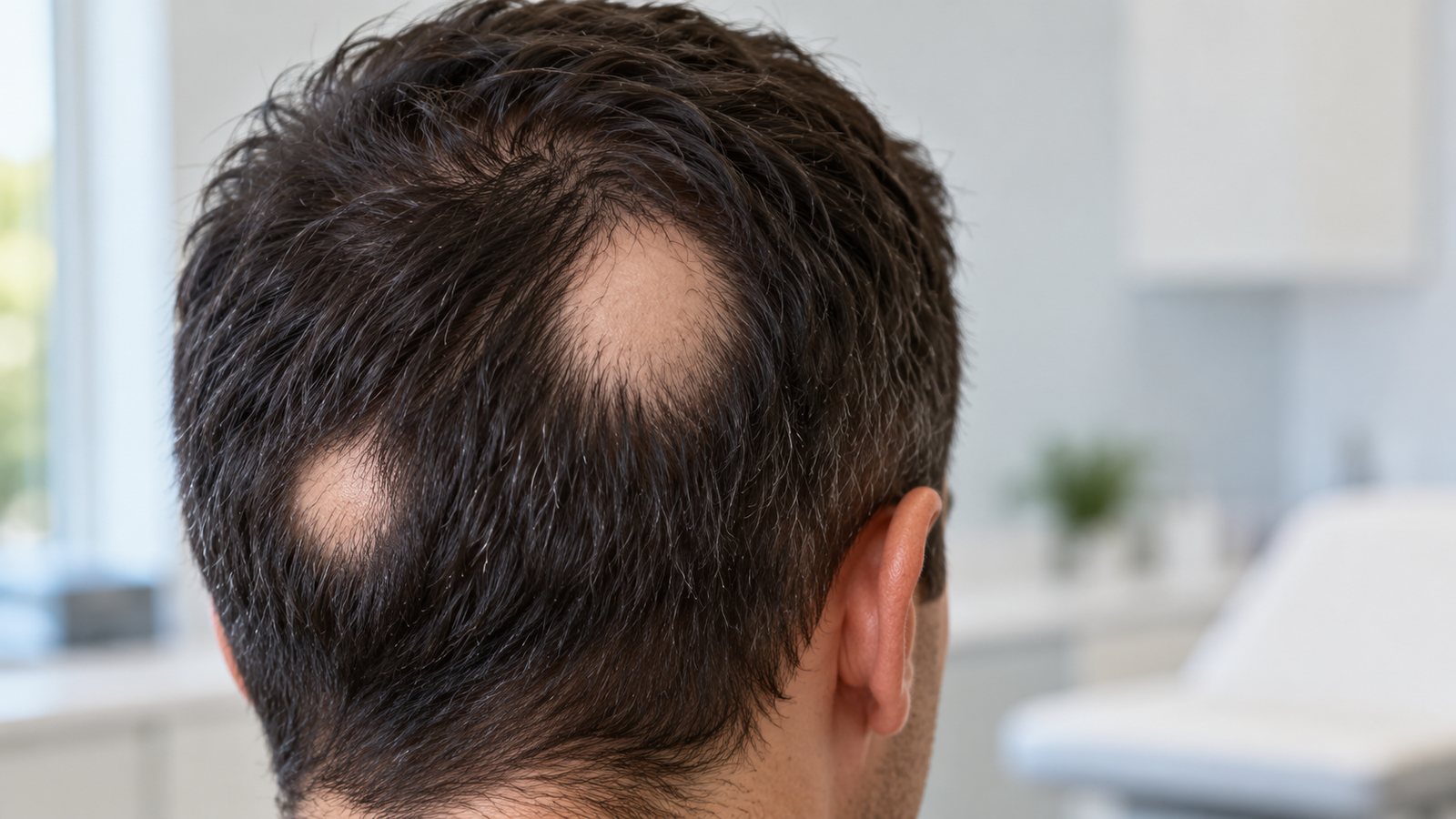
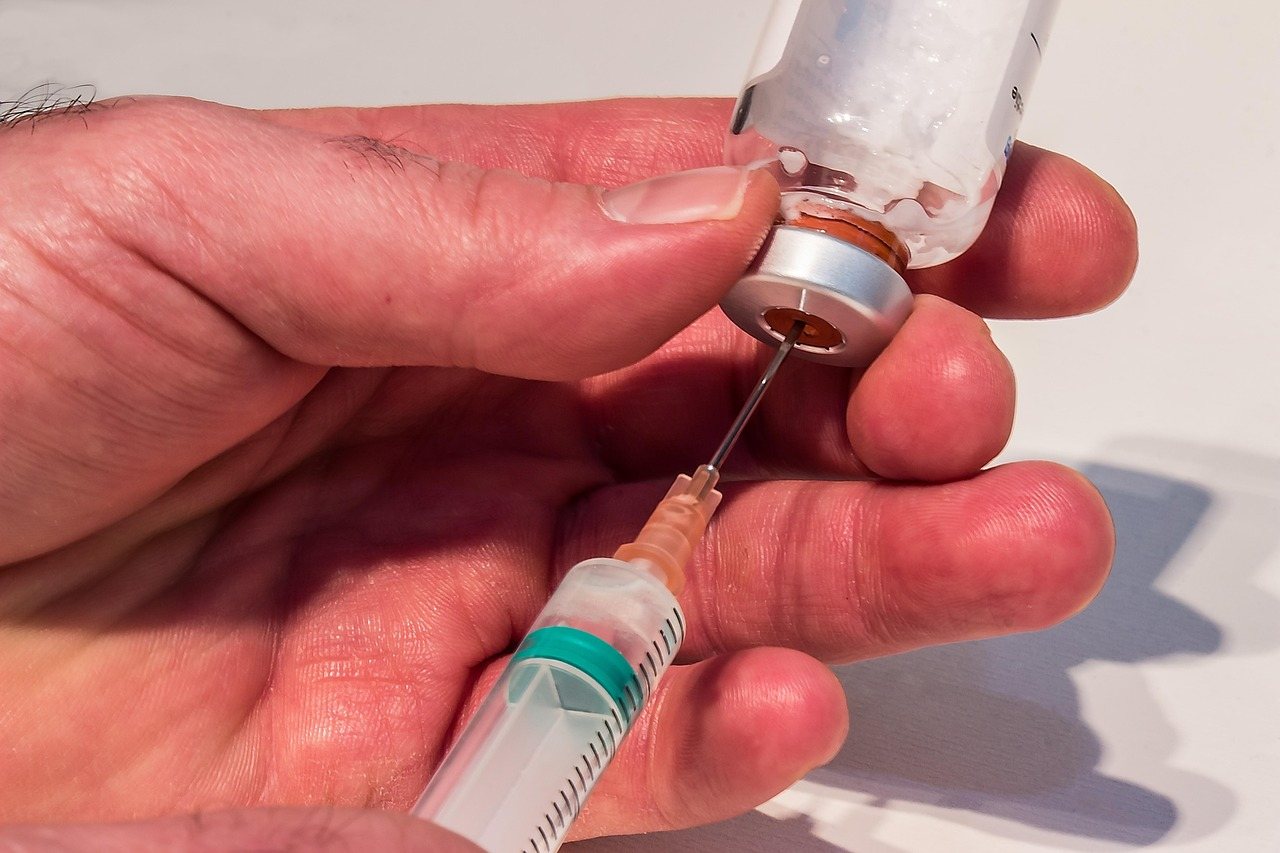
Finasteride 1 mg: 3–12 Months to Judge, Any Gains Lost If You Stop
Improvement takes at least three months of daily use, significant growth may take up to a year, and the effect reverses within 12 months of stopping. At 12 months in trials, 86% of men on finasteride had no further drop in hair count, against 42% on placebo.

Finasteride is a daily pill for men with pattern hair loss.
The approved hair-loss dose is 1 mg. Improvement takes at least three months, and the effect reverses within 12 months of stopping. Significant growth may take up to a year. The FDA clearance covers men only.
Finasteride is a 5-alpha reductase inhibitor that lowers scalp DHT by about 64%
Finasteride belongs to a group of drugs called 5-alpha reductase inhibitors. 5-alpha reductase is the enzyme that turns testosterone into DHT (dihydrotestosterone), the hormone tied to pattern hair loss. Block the enzyme and less DHT reaches the hair follicles. In the trial data the American Hair Loss Association (AHLA) reports, finasteride 1 mg lowered scalp DHT by about 64% after 42 days.
NYU Langone says the drug does two things: it slows the rate of hair loss and it stimulates new hair growth. The results section below shows how much of each men in the trials actually got.
Propecia 1 mg and Proscar 5 mg are the same drug with different approvals
Both brands contain the same active medicine. Per AHLA, Proscar contains 5 mg of finasteride and is approved for BPH. BPH stands for benign prostatic hyperplasia, which means an enlarged prostate. Propecia is the 1 mg version, and 1 mg is the dose approved for hair loss.
So a 5 mg label means the prostate dose, not the hair-loss dose.
The FDA cleared it in 1997 for men with male pattern hair loss
The FDA approved finasteride 1 mg, sold as Propecia, for male pattern hair loss in men on December 19, 1997. NYU Langone describes the oral form as a medicine for men with male pattern hair loss, which doctors call androgenetic alopecia. Bosley, a hair-transplant company, states plainly that finasteride is FDA-cleared only for men.
Women: not FDA-cleared, not recommended, and linked to birth defects
Female pattern hair loss (FPHL) is the most common cause of hair loss in women, according to the American Academy of Dermatology. Even so, the sources give two reasons finasteride is not the default for women. Bosley says it is not recommended for women, especially women who are or may become pregnant. Cleveland Clinic warns that it can cause birth defects.
If you are a woman, skip it and ask about these instead: NYU Langone lists topical minoxidil for female pattern hair loss, plus antiandrogens such as spironolactone and estrogen-containing birth control pills as prescription options.
Take one tablet by mouth at the same time each day, and follow six safety rules
NYU Langone says you take finasteride once a day by mouth, and that it works best at the same time each day. Pairing the dose with something you already do daily makes that easier.
Cleveland Clinic adds six rules that cover you and your household:
- Anyone who is pregnant or may get pregnant should not handle broken or crushed tablets. Whole tablets are not expected to cause harm as long as they are not swallowed.
- Do not donate blood while you take it.
- It can change PSA test results. PSA (prostate-specific antigen) is a blood test used to check the prostate, so tell whoever orders one that you take finasteride.
- Tell the prescriber if you have liver disease.
- Tell the prescriber about saw palmetto or other dietary supplements, which can interact with it.
- Ask the prescriber about cancer risk. Cleveland Clinic says you may be more at risk for certain types of cancer if you take it.
NYU Langone says side effects are rare but may include erectile dysfunction and depression. Report either one to your prescriber.
If you will not take a pill every day, skip it: NYU Langone’s page lists topical minoxidil as an option for men too, but it is applied to the scalp twice a day for best results.
Results take 3 to 12 months to judge and reverse within a year of stopping
This is where finasteride asks the most of you: Cleveland Clinic says you have to keep taking it to keep the results.
| Time point | What the source reports | Source |
|---|---|---|
| 3 months | Minimum daily use before improvement shows | Cleveland Clinic |
| About 4 months | The drug starts working | NYU Langone |
| 6 months | A dermatologist reviews progress | NYU Langone |
| 12 months | Significant growth may only now show. In pivotal trials of more than 1,500 men, 86% on finasteride had no further drop in hair count, against 42% on placebo, and investigators rated 65% as having increased hair growth | NYU Langone, AHLA |
| 5 years | 48% had more visible hair, 42% had no further visible loss and 10% had visible loss. In the placebo group, 75% got worse | AHLA |
| Within 12 months of stopping | The effect reverses | Cleveland Clinic |
Read plainly: the first fair check comes at about six months, when NYU Langone has a dermatologist review progress, and the fuller verdict comes by 12 months. At five years, more visible hair was the most common single outcome.
Rule out other causes first: normal shedding goes up to 100 hairs a day
MedlinePlus says losing up to 100 scalp hairs a day is normal. It also says thyroid problems, diabetes or lupus can cause hair loss. Bosley notes that finasteride may not work for hair loss caused by nutrient deficiency, stress or certain medical conditions. A drug that lowers DHT is aimed at one cause, and these are different causes.
Before you ask for finasteride: a 6-point fit check
Its limits are the wait and the daily commitment in the table above, but it has five-year trial figures behind it (AHLA), so it fits a man with confirmed male pattern hair loss who will take it every day for as long as he wants the results.
- Is your hair gradually getting finer and shorter? AHLA says that in male pattern hair loss, repeated DHT exposure makes hairs gradually finer, shorter and less visible.
- Has a clinician checked for the other causes above? Only a clinician can confirm that the pattern is male pattern hair loss.
- Are you a man? The clearance covers men only (Bosley). Women should ask about female pattern hair loss and the options in the women’s section.
- Is the tablet 1 mg? The 1 mg Propecia dose carries the hair-loss approval, and the 5 mg Proscar dose is for BPH (AHLA).
- Can you take it at the same time every day for at least a year? It is a once-a-day pill (NYU Langone), and growth may take that long to show.
- Could someone who is pregnant or may get pregnant handle broken or crushed tablets in your home, or does another safety rule above apply to you? Raise each of these Cleveland Clinic warnings with the prescriber.
Bring these answers to a clinician. Only a clinician can answer item 2, and whether finasteride fits you is the prescriber’s decision.
Related reading: 5mg Finasteride vs 1mg; Minoxidil hairgrow.
FAQ: finasteride needs a prescription, and more visible hair was the most common five-year result
Do I need a prescription? Yes. NYU Langone describes oral finasteride as a prescription medication, so a doctor decides whether you get it and at what dose. The same 30 tablets cost a different amount at each seller, and telehealth prices include that visit: see finasteride 1 mg prices at telehealth brands and cash pharmacies, re-read every day.
Does finasteride regrow hair? Often, in the trials. Per AHLA, investigators rated 65% of men on finasteride as having increased hair growth after one year. At five years, more visible hair was the most common single outcome: 48% of men, against 42% with no further visible loss and 10% with visible loss. So 48% + 42% = 90% of men on finasteride held or gained hair, while 75% of the placebo group got worse.
Is a 5 mg tablet the same as the hair-loss dose? No. Per AHLA, 5 mg Proscar is approved for BPH, and 1 mg Propecia is the dose approved for male pattern hair loss.
See a dermatologist before you start, and again at six months
See a dermatologist if you are shedding more than the normal range, if you have signs of another medical condition, or if you are a woman with thinning hair. Go back if you notice the side effects listed above. NYU Langone has a dermatologist review progress at six months, which is a sensible point to check whether the drug is doing anything.
The AAD explains how dermatologists find the cause of hair loss, and finding the cause is the step that decides whether finasteride is even relevant to you.
Not medical advice: This article summarizes public health sources and published studies. It does not promise any result. Only a doctor can decide whether finasteride fits you.
Sources
- https://www.americanhairloss.org/hair-loss-treatment/drug-therapy/finasteride/
- https://my.clevelandclinic.org/health/drugs/19638-finasteride-tablets-alopecia
- https://www.bosley.com/blog/the-truth-does-finasteride-really-work-for-hair-loss/
- https://nyulangone.org/conditions/hair-loss/treatments/medication-for-hair-loss
- https://www.aad.org/public/diseases/hair-loss/types/female-pattern
- https://medlineplus.gov/hairloss.html
- https://www.aad.org/public/diseases/hair-loss/treatment/diagnosis-treat