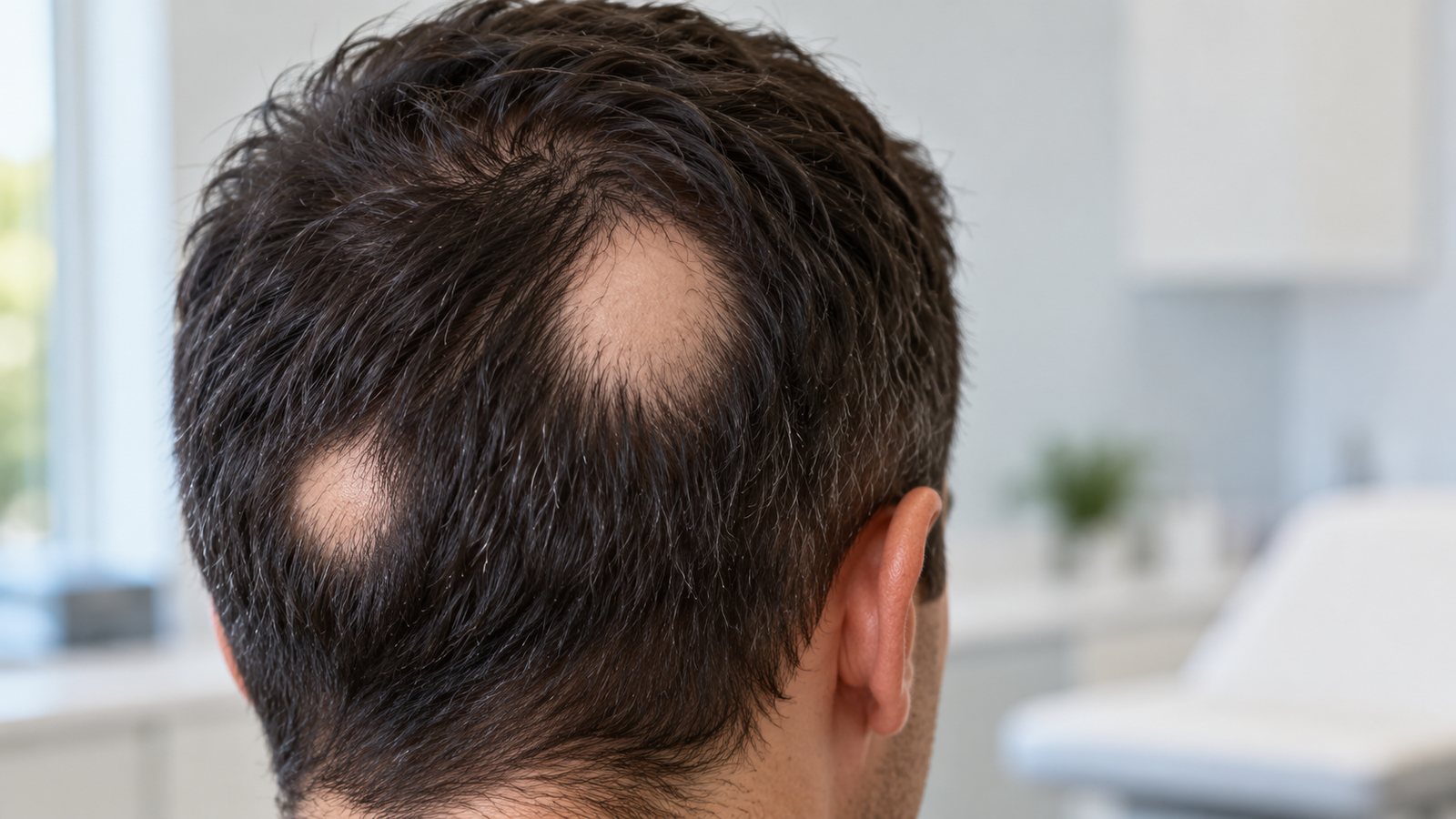
Before You Buy Minoxidil: Does It Work – And What Quitting Costs
Minoxidil can slow further hair loss and may thicken hair. Haber Dermatology says visible density typically takes about six months to show, and the gains last only while you keep using it.

Minoxidil does work, but slowly, and only while you keep using it. According to Haber Dermatology, it typically takes around six months to see better density. Density means how closely hairs cover a patch of scalp. Stop using it, and new growth usually falls out within 3 to 4 months, per Advanced Hair.
So before you buy, two questions matter. Will it work on the kind of thinning you have? And will you keep using it once you start? The sections below answer both from dermatology and hair-restoration sources.
Minoxidil Keeps Hairs in Their Growth Phase Longer
Hair grows in cycles, and minoxidil makes the growing part last longer. The International Society of Hair Restoration Surgery (ISHRS) says it lengthens the anagen, or growth, phase. The society says this “decreases hair loss” and thickens hair overall.
The same page adds a condition: the body has to convert minoxidil into minoxidil sulfate before it works. The drug was first introduced as a blood pressure medicine, according to a review on PubMed Central. It now comes as both a topical and an oral form, per the Baylor College of Medicine blog.
Does Minoxidil Work? Its First Job Is Slowing Further Loss
Keeping the hair you have counts as a result. Haber Dermatology says slowing further loss “is often the primary reason clinicians recommend minoxidil.”
Thicker hair is the second, less certain payoff. Clinical studies show “only about 40% of men experience moderate hair regrowth,” per the American Hair Loss Association (AHLA). That is about 2 in 5 men; others may notice minimal or no benefit. Women tend to respond better, the same page says, though results vary widely from person to person.
Shedding Slows at 6–8 Weeks; Judge Density at Month 6, Peak Near Month 12
Haber Dermatology, Advanced Hair and the Baylor College of Medicine blog all put first results at month 6 or sooner. They disagree on when the early shed ends.
| Milestone | Haber Dermatology | Advanced Hair | Baylor College of Medicine |
|---|---|---|---|
| Early shed ends | Tapers off by weeks 6–8 | Subsides within 2–6 weeks | Starts at 1–2 months in up to 25% of patients; resolves in 4 weeks |
| First visible results | About 6 months, for density | 4–6 months | 4–6 months |
| Peak results | Not given | Around 12 months | Not given |
| New growth lost after stopping | Not timed; hair returns to its old path | Within 3–4 months | New hairs shed after 3 months off |
If you stop at the month-6 check: new growth usually falls out within 3 to 4 months, per Advanced Hair. So it is gone about 9 to 10 months after your first dose.
Is it working yet? Ask one question at each checkpoint:
- Week 8: has shedding started to slow?
- Month 6: has the loss held steady, and is density any better?
- Month 12: is density better than it was at month 6?
By Haber’s measure above, a scalp that has held steady at month 6 is a pass, not a fail.
Best on the Crown, Not Only the Crown, and No Help Where Follicles Are Gone
According to Advanced Hair, minoxidil works best on the crown, the top-back of the head. The same page says it cannot regrow hair where follicles are gone. A follicle is the tiny pocket in the skin that grows each hair.
Haber Dermatology disputes the idea that it only works on the crown, calling it “a common misconception.” The clinic says doctors also report results along the frontal hairline.
Advanced Hair adds that it is most effective for recent hair loss.
The Liquid Goes On Twice a Day, With No End Date
Starting minoxidil means starting a daily habit. Advanced Hair says the solution is applied twice daily and the foam once or twice daily, “indefinitely.” Over the six months Haber Dermatology gives for visible density, twice a day comes to about 360 applications.
Pick the strength next. The AHLA says the 2% solution is now “almost obsolete” for most people because the 5% gives better results. For women, ISHRS says the 5% used once a day may work better.
Side Effects: Scalp Irritation on the Liquid, Unwanted Hair on the Pill
If the liquid irritates your scalp, the foam was made for that. ISHRS says the liquid’s most common side effects are skin irritation, redness and dryness, caused by propylene glycol in the formula. The foam has none, so it is less greasy and less irritating.
The pill does not irritate the skin but brings other risks, per the Baylor College of Medicine blog. Unwanted hair growth can happen in up to one-third of women taking it, a bit less often with the topical. The pill also needs monitoring for heart side effects.
Stop and New Growth Falls Out Within 3–4 Months, Then Loss Resumes Its Old Pace
Stopping costs you the gains and nothing beyond them. Advanced Hair says hair loss then “returns to its previous rate.”
Haber Dermatology says the same: there is “no penalty for stopping.” Your hair goes back to the path it was already on.
That cuts both ways. Quitting does not leave you worse off than before you started, but no gain lasts after you stop.
Gains Can Fade Over the Years as the Underlying Loss Progresses
Minoxidil does not halt the cause of the loss; the loss carries on underneath it. The AHLA says many users see smaller gains over time as their loss continues.
For a separate hair loss medicine to raise with a dermatologist, see finasteride for thinning hair.
Verdict: Worth a Six-Month Trial if You Plan to Keep Using It
- Verdict: minoxidil suits someone who is thinning, still has follicles in that area, and accepts a habit with no end date.
- The flaw: the gains last only while you use it. Stop, and new growth falls out within months, per Advanced Hair. The fix: work out the monthly cost before you commit, using Before You Buy Topical Minoxidil: Ask How Long You’ll Keep Paying. Then judge it at month 6 and month 12, not week 8.
- Strengths: it is one of the few topical options approved by the U.S. Food and Drug Administration, per Advanced Hair. It lengthens the growth phase, per ISHRS.
- Who should skip it: anyone hoping for hair on patches where follicles are gone, because it cannot regrow hair there. For a receded hairline or bald areas, a hair transplant is the permanent option, per Advanced Hair. Skip it too if you are pregnant or have uncontrolled heart disease. The Baylor College of Medicine blog says minoxidil should not be used in either case.
Next step: if you are weighing the pill instead of the topical, read the minoxidil pill for hair loss.
FAQ: Does Minoxidil Grow Hair, and How Long Does Shedding Last?
Does Minoxidil Actually Grow Your Hair?
It can, in three ways, per Advanced Hair. It pushes resting follicles back into growth sooner, keeps them growing longer, and over time can enlarge shrinking follicles so strands come in thicker.
How Long Does Minoxidil Shedding Last?
Weeks, not months, and it is expected. Haber Dermatology calls the early shed “a normal part of the process.” The Baylor College of Medicine blog calls it a positive sign that the medicine is working. For why it happens, see New Minoxidil Users: Is Your Hair Fall the Normal Early Shed?
Is the Pill Better Than the Liquid?
Not on density. A meta-analysis cited by the Baylor College of Medicine blog, covering four studies and more than 270 patients, found no significant difference in density between the two forms.
When to See a Dermatologist
If you are not sure your thinning is the pattern kind, see a dermatologist before you start. Dr. Oyetewa Asempa, a dermatologist quoted on the Baylor College of Medicine blog, says the most common type, androgenetic alopecia, comes from hormonal changes and genes. Other types can follow autoimmune disease, medications, vitamin deficiencies or harsh hair-care practices.
This page summarizes public sources for general information. It is not medical advice, and no result is promised.
Sources
- https://haberderm.com/minoxidil-myths-what-to-expect/
- https://www.advancedhair.com/learn/what-is-minoxidil
- https://ishrs.org/patients/treatments-for-hair-loss/medications/minoxidil/
- https://blogs.bcm.edu/2026/05/28/can-minoxidil-regrow-your-hair/
- https://www.americanhairloss.org/the-truth-about-rogaine-topical-minoxidil-what-you-need-to-know-before-you-start/
- https://pmc.ncbi.nlm.nih.gov/articles/PMC6691938/