Does Creatine Cause Hair Loss? The DHT Study Never Looked at Hair
Current evidence says no for healthy people without a family history of hair loss. The worry traces to a 2009 study of 20 rugby players that measured a 56% DHT rise, not hair, and a 12-week 2025 trial of 5 grams a day found no significant change in hair.

Does creatine cause hair loss? Current evidence says no, with limits.
A dermatology practice sums up the research this way: creatine does not cause hair loss in healthy people without a genetic tendency to it. The worry comes from one small 2009 study that measured a hormone, not hair. A 2025 trial that did look at hair found no significant change. Two gaps remain.
The studies are short, and they say little about people with a family history of hair loss or a hair-loss disorder.
The worry traces to one 2009 study: 20 rugby players, 3 weeks
According to Cleveland Clinic, 20 college-age rugby players took 25 grams of creatine a day for one week, then 5 grams a day for two more weeks. After that first week, researchers reported a 56% increase in dihydrotestosterone (DHT), a hormone. The creatine hair-loss link started with that one figure.
A short run of large doses before a smaller daily amount is called a loading phase. Dose math: 25 g ÷ 5 g = 5. The loading dose was 5 times the study’s own later daily dose. It was also 5 times the top of the 3 to 5 grams a day that Cleveland Clinic calls appropriate and dermatologyofct.com calls standard.
A 56% DHT rise was measured; hair loss was not
Here is what the 2009 result does not tell you:
- Whether anyone lost hair. The study “did not measure hair loss itself,” the dermatology practice notes.
- Whether the result holds in more people. Dr. Hill, quoted by Cleveland Clinic, calls the study “very small” and says it “didn’t directly connect creatine to hair loss.”
- What DHT did at 5 grams a day. The summaries cited here give the 56% figure for the first week only, not for the two lower-dose weeks.
- What happens after three weeks. One week plus two weeks was the whole study.
DHT matters because it is tied to pattern hair loss in men and some women
That link is why a DHT number drew attention. DHT is strongly linked to male pattern baldness and to some cases of female hair thinning, according to dermatologyofct.com. The worry goes like this: if creatine raises DHT, it might speed up the kind of hair loss DHT is tied to.
None of this article’s sources shows that chain from start to finish. The DHT link is also why the reassurance below comes with a condition about genetics.
If you are weighing medicines for pattern hair loss, see how minoxidil and finasteride differ for men and what the evidence says about minoxidil and finasteride for women.
A 12-week 2025 trial found no significant change in DHT or hair
The newer evidence is a 2025 randomized controlled trial. “Randomized” means people were put into groups by chance. “Controlled” means one group got a placebo, an inactive look-alike, for comparison.
Per dermatologyofct.com, the trial gave resistance-trained men (men already doing strength training) aged 18 to 40 either 5 grams of creatine a day or a placebo for 12 weeks. It found no significant difference between the groups in hormones or hair. Cleveland Clinic cites it as one example of recent research and reports the same result: creatine “didn’t significantly affect DHT levels,” and hair density and thickness did not change.
| Study | 2009 rugby study | 2025 trial |
|---|---|---|
| Who took part | 20 college-age rugby players | Resistance-trained men, 18–40 |
| Daily dose | 25 g for 1 week, then 5 g for 2 weeks | 5 g of creatine, or a placebo |
| Length | 3 weeks | 12 weeks |
| Measured hair? | No; it reported DHT, not hair | Yes: density, follicular unit count, thickness |
| Result | 56% DHT rise after week 1 | No significant difference in hormones or hair |
The 2009 study measured a hormone; the 2025 trial measured hair. Sources: Cleveland Clinic (2009 doses and result), dermatologyofct.com (2025 design and result; 2009 did not measure hair).
Next to the 2009 study, this trial ran 12 weeks instead of 3, which is four times as long. Its limits are just as plain: men only, one dose of 5 grams a day, and 12 weeks is still not years.
What is still unknown: years of use, and people with a family history
Gap 1: time. Most creatine studies last weeks to months, so long-term effects are less studied. The two studies described here ran 3 weeks and 12 weeks. Neither one tells you about years of daily use.
Gap 2: who was studied. The dermatology practice limits its reassurance to healthy people “without genetic predisposition.” The same page notes that the 2025 trial left out people with known hair-loss disorders. And because all its participants were men, the trial says nothing directly about women.
If you have a strong family history of baldness or a hair-loss disorder, dermatologyofct.com advises checking with a provider before you start creatine. Cleveland Clinic names a second group: there isn’t enough evidence that creatine supplements are safe for people who are pregnant or breastfeeding, or who have diabetes, chronic kidney disease or liver disease.
So the gaps are real: short studies, and little on people with a family history. But the evidence is not evenly split. The worry rests on one 3-week study of 20 players that measured a hormone, not hair. Since then, dermatologyofct.com says, “multiple reviews and trials have failed to replicate the DHT increase,” and it calls the 2025 trial “the strongest evidence to date” that creatine does not negatively affect scalp hair in healthy men over 12 weeks.
The same page says standard doses of 3 to 5 grams a day have not shown a harmful effect. Dr. Hill makes the same point to Cleveland Clinic: “recent investigations haven’t replicated those results.” So if you have no family history of hair loss and take a standard dose, current evidence does not point to creatine as the reason for your shedding. Work through the other causes first.
Checklist: seven things to rule out before you blame creatine
- Start from the normal baseline. MedlinePlus says losing up to 100 scalp hairs a day is normal. Keep that number in mind before you look for a cause.
- Check your family history. MedlinePlus lists family history as a cause of hair loss. It is also the group the creatine reassurance does not cover (Gap 2 above).
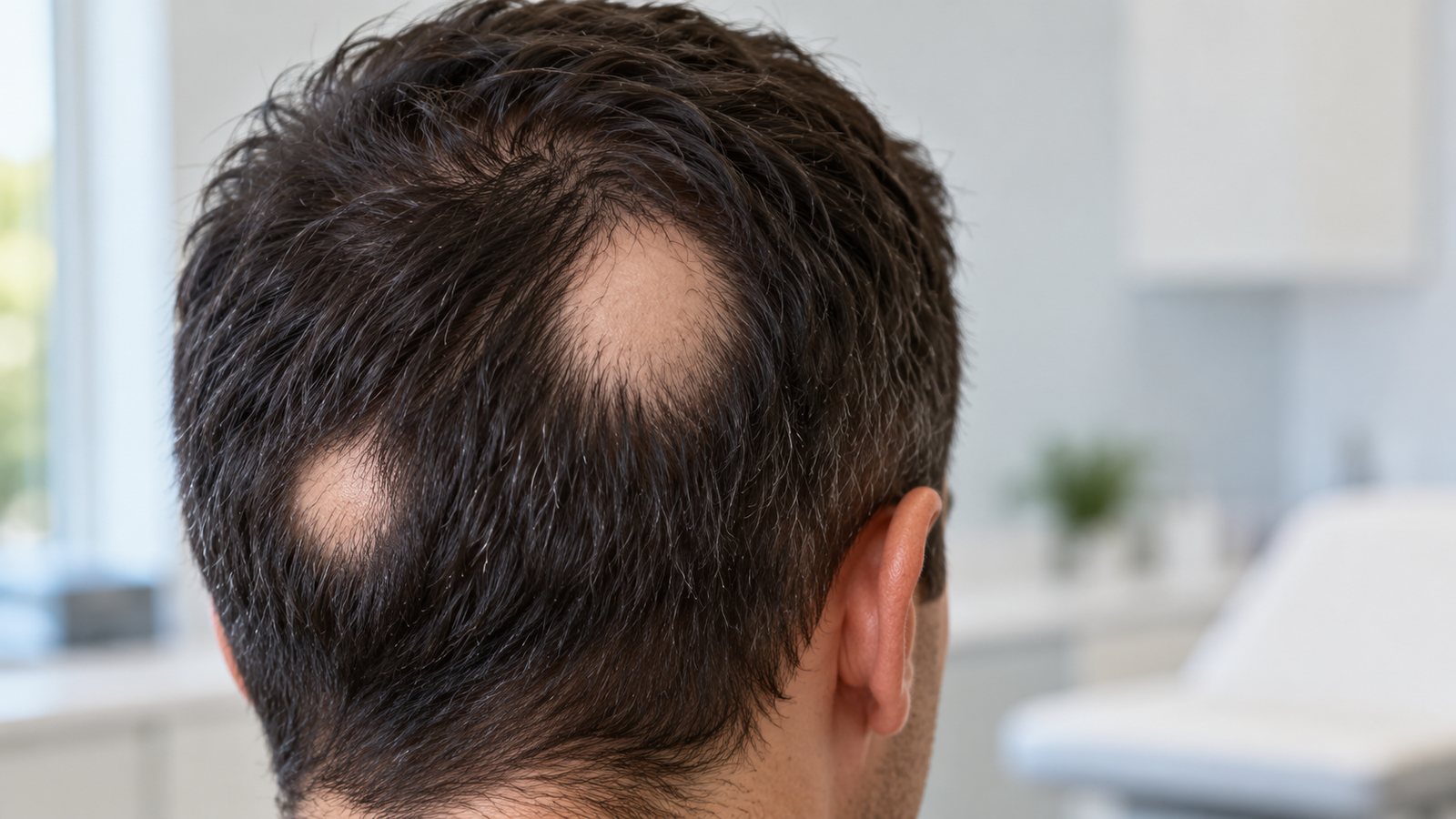
- Look at the shape of the loss. In alopecia areata, hair usually falls out in small, round patches about the size of a quarter, per the National Institute of Arthritis and Musculoskeletal and Skin Diseases (NIAMS). That is a different condition from pattern hair loss.
- If you are a woman, start with the most common cause. The American Academy of Dermatology says female pattern hair loss is the most common cause of hair loss in women.
- Look at stress and diet. MedlinePlus also names stress, a low-protein diet and poor nutrition among the other causes of hair loss. Ask yourself whether any of them fits your life right now.
- Look at medicines and medical conditions. MedlinePlus says certain diseases, such as thyroid problems, diabetes or lupus, can cause hair loss, and so can certain medicines and chemotherapy for cancer. Cleveland Clinic names antidepressants, beta-blockers, blood thinners, blood pressure medications and hormone therapies among the medicines that can have hair loss as a side effect.
- If steps 1 to 6 leave no likely cause, the cause is still open. The same goes for round patches like those in step 3. The next section covers where a dermatologist starts.
A dermatologist’s first step is finding the cause
The American Academy of Dermatology says effective treatment begins with finding the cause of the hair loss. dermatologyofct.com describes the same job: it says it can help determine whether hair loss is genetic, hormonal, nutrition-related, stress-related or due to other causes. You can read more guides on the causes of hair loss before you go.
This page summarizes public health sources and published study summaries. It is not medical advice.
Sources
- https://health.clevelandclinic.org/does-creatine-cause-hair-loss
- https://dermatologyofct.com/does-creatine-cause-hair-loss/
- https://medlineplus.gov/hairloss.html
- https://www.niams.nih.gov/health-topics/alopecia-areata
- https://www.aad.org/public/diseases/hair-loss/types/female-pattern
- https://www.aad.org/public/diseases/hair-loss/treatment/diagnosis-treat