Before You Buy Pumpkin Seed Oil for Hair: The Trial Used a Capsule
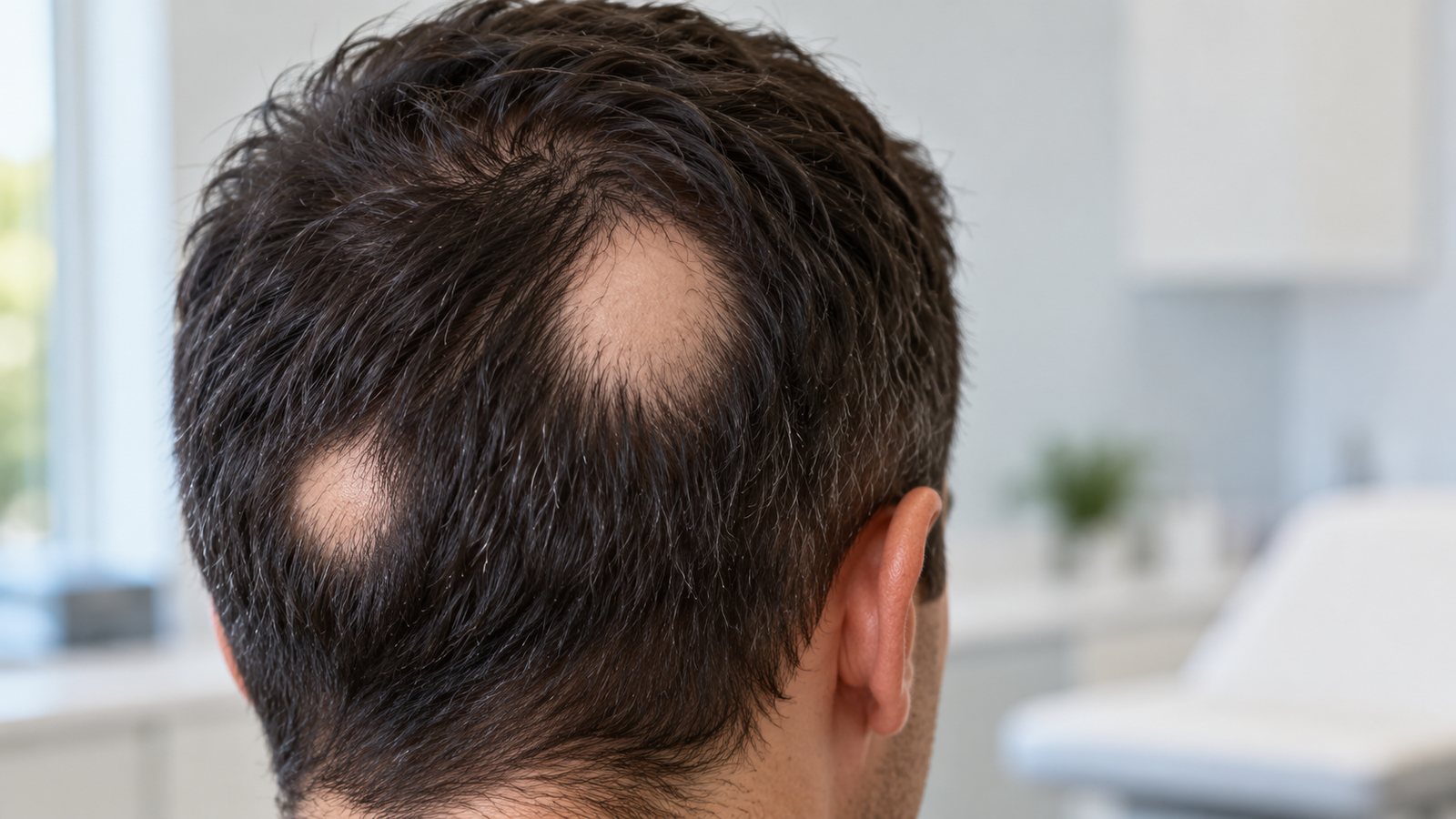
In the only placebo-controlled trial, 76 men took 400 mg of pumpkin seed oil a day by mouth for 24 weeks. Their mean hair count rose 40%, against 10% on placebo.
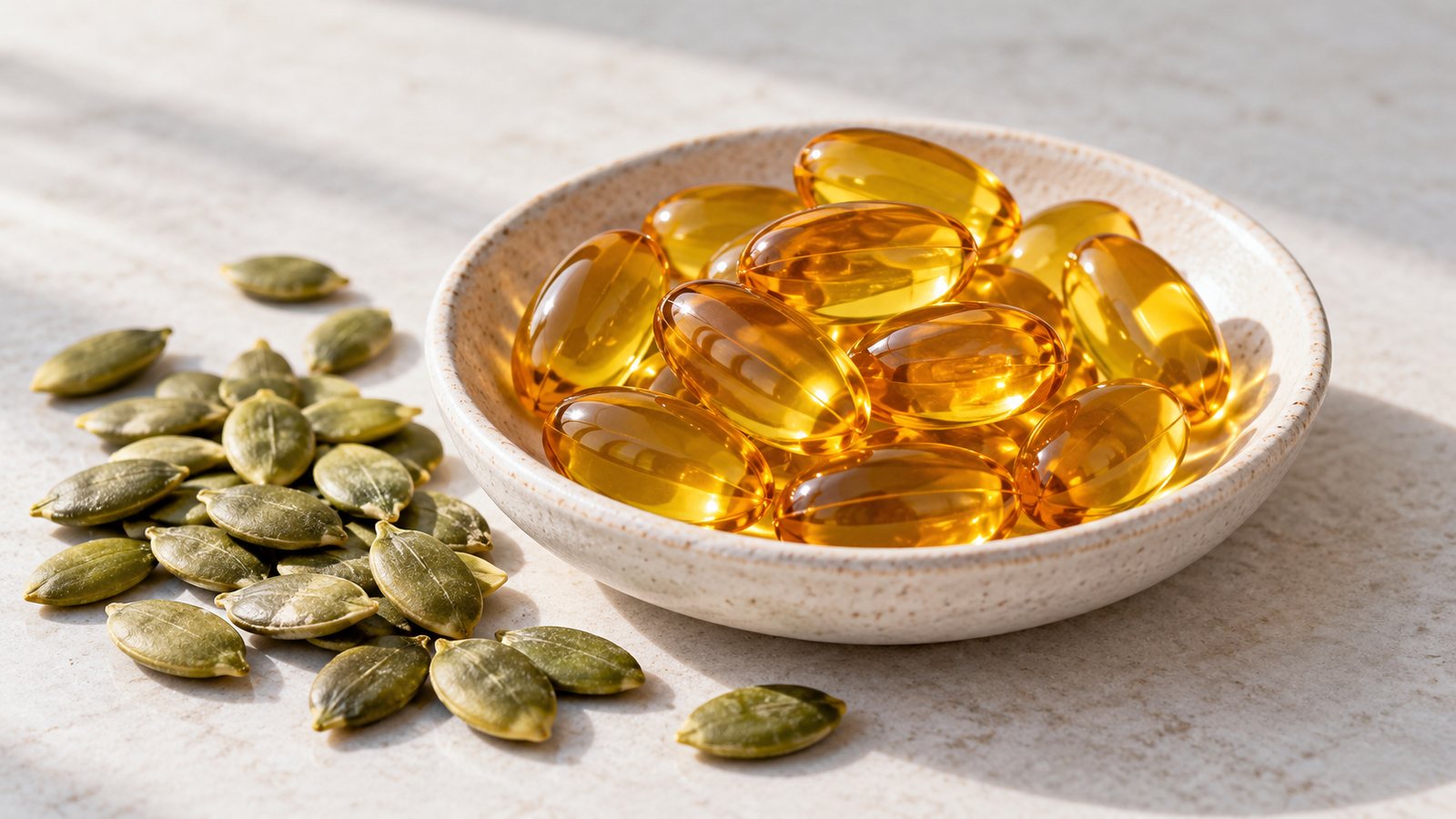
The study behind most pumpkin oil for hair claims gave men a capsule, not a scalp oil. In it, men with pattern hair loss took a pumpkin seed oil supplement or a placebo. The Amazon “for Hair Growth” oil covered below is topical. Check which one you’re holding before you spend money.
Pumpkin Seed Oil Comes in Two Forms, and the Trial Used Only One
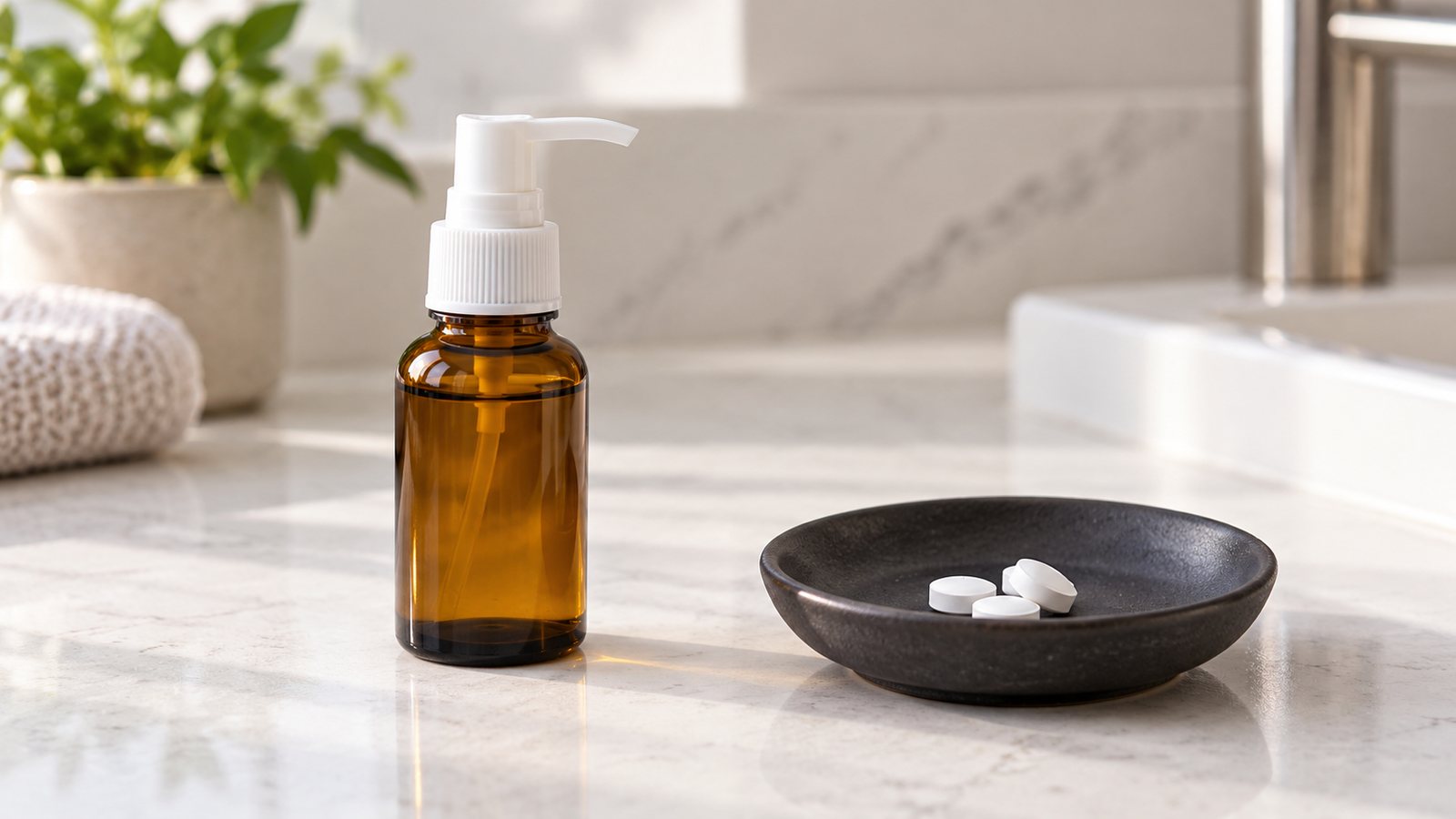
Healthline says pumpkin seed oil is sold either as a topical product or as a capsule you swallow. These reach the body by different routes, so a result for one form does not carry over to the other.
The 2014 trial used the capsule. Healthline says the men “took either pumpkin seed supplements or a placebo.” Perfect Hair Health, a hair-loss research blog, adds a key detail: “The supplement tested was not just pumpkin seed oil. It also contained a small amount of several other ingredients.”
Now look at one Amazon listing. It sells a 4 fl oz glass bottle described as USA grown, USDA Organic, cold-pressed and unrefined, with “for Hair Growth” in the product name. At the listed $9.89 (October 2026), that comes to $2.47 per fl oz. It’s a topical oil, not the oral blend the trial measured.
See also: hair oil and hair growth label claims.
The 2014 Trial Found a 40% Hair Count Gain in Men Over 24 Weeks
The trial was randomized, double-blind and placebo-controlled. It was run by Young Hye Cho and colleagues in South Korea and published in Evidence-Based Complementary and Alternative Medicine on 23 April 2014, doi 10.1155/2014/549721. You can find the paper by that doi.
What it tested, per the paper and two summaries of it:
- Who: men with androgenetic alopecia, the medical name for male pattern hair loss.
- What they took: a pumpkin seed oil blend or a placebo, by mouth.
- How long: 24 weeks.
- Hair count: up 40% in the supplement group, per Perfect Hair Health.
- Gap over placebo: “30% more hair growth than those who received the placebo”, per Healthline.
Placebo gain = 40% (Perfect Hair Health) − 30 points (Healthline) = about 10%, if Healthline’s “30% more” means percentage points.
Either way, the placebo group gained hair too, so the gap over placebo, not the raw 40%, is the fair measure of what the supplement added. This is one trial, and it tested a blend, so it can’t show which ingredient did the work or what the topical form does.
Perfect Hair Health mentions “two human studies published since” 2014. Healthline’s page, updated October 1, 2025, still says more research is needed.
The Trial Tested Hair Growth; Its Hormone Mechanism Comes From Rat Research
The trial was designed to test the oil’s effect on hair growth and how well men tolerated it. The hormone story comes from earlier research named in its background section.
That story is about dihydrotestosterone (DHT), a hormone the body makes from testosterone. Monpure, a brand blog, says research shows “pumpkin seed oil blocks the production of DHT, the hormone responsible for hair loss”. Cleveland Clinic also names lower DHT as one reason the supplements may help.
The trial paper’s background says pumpkin seed oil “has been shown to block the action of 5-alpha reductase and to have antiandrogenic effects on rats”. That enzyme makes DHT, and rats are the only animals the sentence names. So “blocks DHT” explains how the oil might work. The results in people here are hair counts.
Who Claims What, and What Backs Each Claim
| Source | Who wrote it | Page type | What it claims | What backs it |
|---|---|---|---|---|
| Monpure | Brand blog | Sales page | Oil “blocks the production of DHT” | Says research shows it; the trial paper’s DHT background names rats |
| Amazon listing | Seller | Product listing | Named “for Hair Growth” | Product features (organic, cold-pressed); a topical oil |
| Cleveland Clinic | Dermatologist Wilma Bergfeld, MD, quoted | Health publisher | Evidence “rated a level two, which is a rather high rating” | Expert reading of the published research |
| Healthline | Health publisher, updated October 1, 2025 | Editorial | “more research is necessary” | Summaries of the 2014 and 2021 studies |
| 2014 trial | Cho and colleagues, peer-reviewed journal | Randomized trial | 40% hair count gain over 24 weeks | An oral blend, tested in men |
Only the trial row reports its own measured result. The other pages summarize, quote an expert or sell a product.
Scalp Comfort Claims Come From a Brand Blog Alone
Monpure says the oil’s anti-inflammatory compounds “help soothe irritated or inflamed scalp conditions, such as dandruff or scalp psoriasis”. The 2014 trial did not measure scalp conditions, and the quote does not name a study.
If flaking or an inflamed scalp is your main concern, treat it as a separate question for a dermatologist. The American Academy of Dermatology (AAD) has a public page on hair loss and how dermatologists approach it.
Next to Minoxidil, Pumpkin Seed Oil Has One Head-to-Head Study in Women
Healthline’s 2021 study is the only direct comparison here. Women with female pattern hair loss used pumpkin seed oil for three months or minoxidil 5% foam, and “Results for both groups were similar.” Healthline does not say which form of the oil they used.
For men, Perfect Hair Health puts the trial’s 40% in 24 weeks beside a separate 48-week study of 1 mg finasteride. It calls that “4x the hair count increase”, but these are two separate trials, not a head-to-head test.
For how the two medicines work, see how minoxidil and finasteride differ for men and what the evidence says on minoxidil and finasteride for women.
Verdict: A Promising Oral Supplement, Not a Dermatologist’s Plan
Verdict: Pumpkin seed oil has one positive trial in men, using an oral blend, and one comparison with minoxidil in women. It suits someone who wants to try it with their doctor’s knowledge.
The real flaw: the main evidence is for an oral blend, while the Amazon “for Hair Growth” listing we checked is a topical oil. The fix: compare your label with the trial (taken by mouth, judged over 24 weeks) and show it to your doctor. Even a pure pumpkin seed oil capsule differs from the trial’s blend.
Healthline also advises buying from reputable companies, because supplements are not regulated by the Food and Drug Administration and quality and dosage may vary.
Strengths: a randomized, double-blind, placebo-controlled trial, a 30% gain over placebo per Healthline, and a dermatologist’s “rather high rating” quoted by Cleveland Clinic.
Who should skip: anyone who wants a scalp product rather than a capsule. Ask about minoxidil 5% foam, the comparator in the 2021 study Healthline describes.
Six Questions to Take to a Doctor Before Starting It
- Is my hair loss pattern hair loss, such as female pattern hair loss, or does it have another cause?
- Does the product I’m considering match the trial: a blend taken by mouth?
- Should I judge it over the trial’s 24 weeks, and how will we measure any change?
- Could it interact with anything I already take?
- Would minoxidil or finasteride suit me better, and why?
- If I’m a woman, does the 2021 minoxidil comparison apply to my type of thinning?
Next step: see every option side by side in hair loss treatments compared.
FAQ
Does Pumpkin Seed Oil Work for Hair Loss?
There is some evidence: one trial in men and one comparison in women, both covered above. Cleveland Clinic quotes a dermatologist: the supplements have been rated “a level two, which is a rather high rating”, a step below the level typically reserved for medications. Healthline still says more research is needed.
Is Topical Pumpkin Seed Oil the Same as the Capsules?
No. The 2014 trial tested an oral blend. Healthline does not say which form the 2021 study used, so check which study backs the form you’re buying.
Does It Have Side Effects?
Healthline’s safety advice centers on allergy. Before using the oil on your scalp, test it on a small area, such as behind your ear, and wait a few days for a reaction. If you take capsules and get food allergy symptoms or stomach upset, Healthline says to stop them at once.
When Should I See a Dermatologist?
See one before you start, so the cause of your hair loss is known first. Healthline also advises speaking with a doctor about hair loss. The AAD’s pages on female pattern hair loss and hair loss care are a good place to start.
This page is general information from published sources. It is not medical advice.
Sources
- https://pmc.ncbi.nlm.nih.gov/articles/PMC4017725/
- https://www.healthline.com/health/pumpkin-oil-for-hair
- https://monpure.com/en-us/blogs/news/powers-of-pumpkin-seed-extract
- https://www.amazon.com/Organic-Pumpkin-Seed-Oil-Nourishes/dp/B0CVFBX4K1
- https://perfecthairhealth.com/pumpkin-seed-oil-for-hair-growth/
- https://health.clevelandclinic.org/pumpkin-seed-oil-for-hair
- https://www.aad.org/public/diseases/hair-loss/types/female-pattern
- https://www.aad.org/public/diseases/hair-loss/treatment/diagnosis-treat