Best Oils for Hairline Growth: Mice, Hair Strands or Your Scalp?
No oil in these sources has been shown to regrow a receding human hairline. Peppermint's best result, a 2014 study, was in mice, and Healthline says rosemary's 2015 match with minoxidil still needs larger studies.
Only 1 of the 4 study rows below tested a single oil on people. That one is rosemary, matched against the hair loss medicine minoxidil, and Healthline says it still needs larger studies. The other 3 rows on the best oils for hairline growth used mice, hair strands off the head, or blends of several oils.
Verdict: Oils Are an Unproven Add-On for a Receding Hairline
- Verdict: Hair oils are a scalp routine some people choose to try. None of the sources here shows one regrowing a receding human hairline.
- The real flaw, and its fix: the evidence is early, so you can’t count on an oil to change a hairline that is receding now. The fix: have a dermatologist (a skin and hair doctor) find the cause first, and use any oil as an extra, not the plan.
- Strengths: in a 2015 study, rosemary oil matched minoxidil with less scalp itching, per Healthline. The National Center for Complementary and Integrative Health (NCCIH) says diluted peppermint oil on the skin is likely safe.
- Who should skip: anyone whose hairline is noticeably receding, a sign Padra’s guide says to take seriously. Skip oil as the plan → see a dermatologist and read what the evidence says on topical minoxidil.
No Oil Here Has Human Proof of Hairline Regrowth
The rows are ranked by how close each study came to a living human scalp. The blend row sits second: the studies were in people, but neither oil was tested alone.
| Oil | Study named | In whom | Caveat | Source |
|---|---|---|---|---|
| Rosemary | 2015 study compared with minoxidil | People | “Performed as well as minoxidil,” less itching; no hairline result given; larger studies needed | Healthline |
| Lavender, cedarwood | Studies of oil mixtures | People with alopecia (hair loss) | Neither oil tested alone | Healthline |
| Peppermint | 2014 study vs jojoba oil, saline and minoxidil | Mice | Most hair growth of the 4 at 4 weeks; not known whether it applies to human hair | Healthline, Hims |
| Argan | 2022 study (Sharifi) | Detached hair | Strands off the head, not a growing scalp | Xyon Health |
The evidence is weak: none of the four rows shows one oil changing a human hairline.
Rosemary Oil Has the Only Human Comparison, and It Needs Larger Studies
Healthline reports that a 2015 study found rosemary oil “performed as well as minoxidil,” with less itching. That makes it the closest these sources come to a head-to-head human result.
Real Simple cites two more papers. It says a clinical review in the medical journal BMJ found rosemary, massaged into the scalp daily, can help with hair growth. It says a SKINmed Journal study confirmed this. Neither summary says who took part or whether a hairline was measured.
Healthline still says larger studies are needed, so treat rosemary as a lead, not a settled answer.
Peppermint Oil: A Mouse Study, Not a Human Result
A 2014 study reported by Healthline found that peppermint oil increased follicle number, follicle depth and overall hair growth in mice. A follicle is the small pocket in the skin that a hair grows from.
The Hims blog adds that the study set peppermint against jojoba oil, saline (salt water) and minoxidil. After 4 weeks, peppermint grew the most hair of the group.
Healthline says more research is needed to know whether that applies to human hair. A mouse result tells researchers what to test next. It doesn’t tell you what your hairline will do.
Safety is clearer than benefit. Healthline cites the NCCIH, which says diluted peppermint oil on the skin is likely safe. It can still cause skin irritation and rashes in some people.
Essential Oils vs Carrier Oils: Dilution Comes First
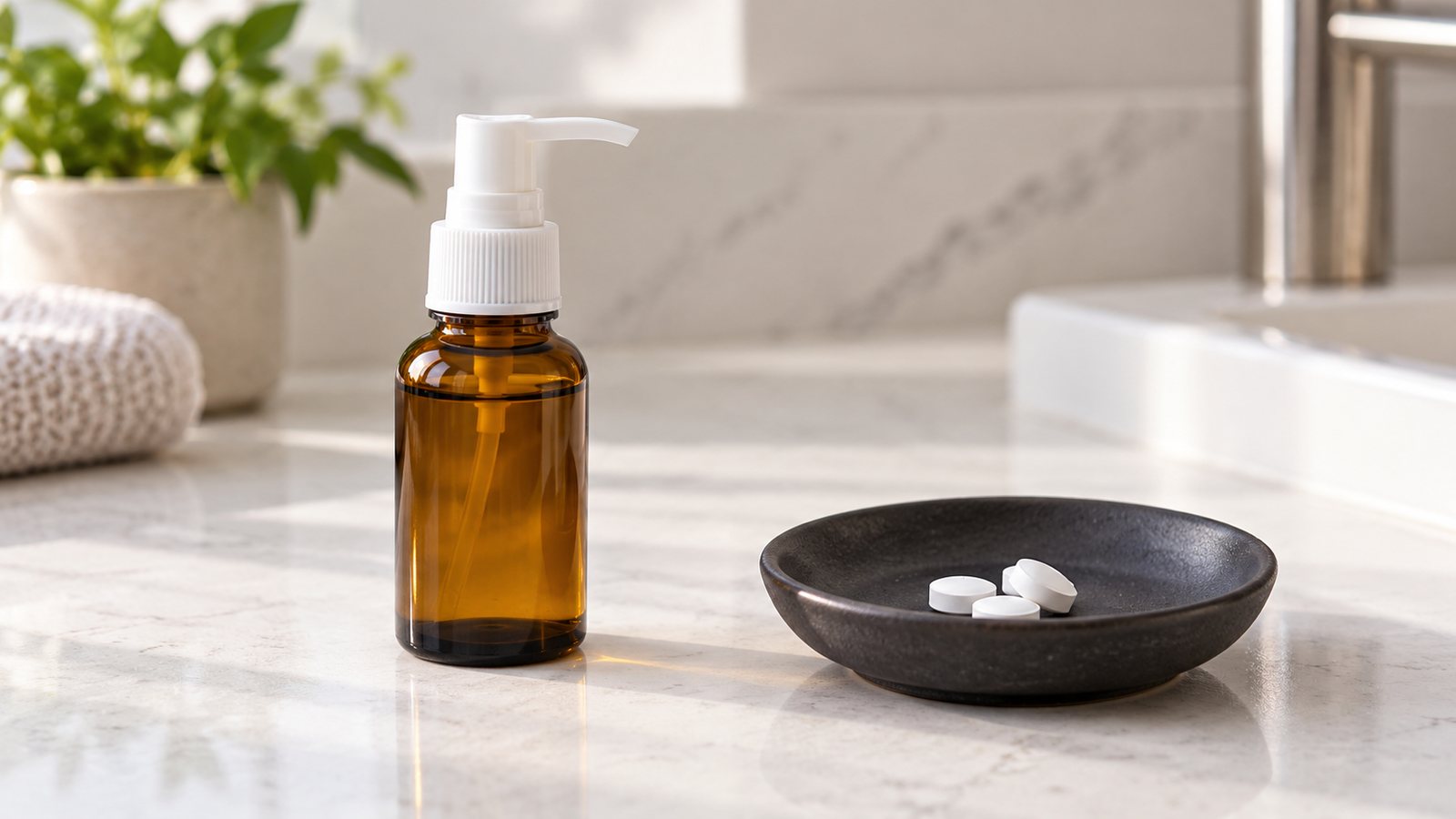
Xyon Health sorts hair oils into two key types, essential oils and carrier oils, and says the difference matters for safe use on the scalp. In plain words, an essential oil is a concentrated plant extract, such as peppermint or rosemary oil. A carrier oil is a milder base oil used to thin it before it touches skin.
Xyon says it is “generally not safe to apply pure essential oils.” So if the bottle holds an essential oil, dilute it before it touches your skin.
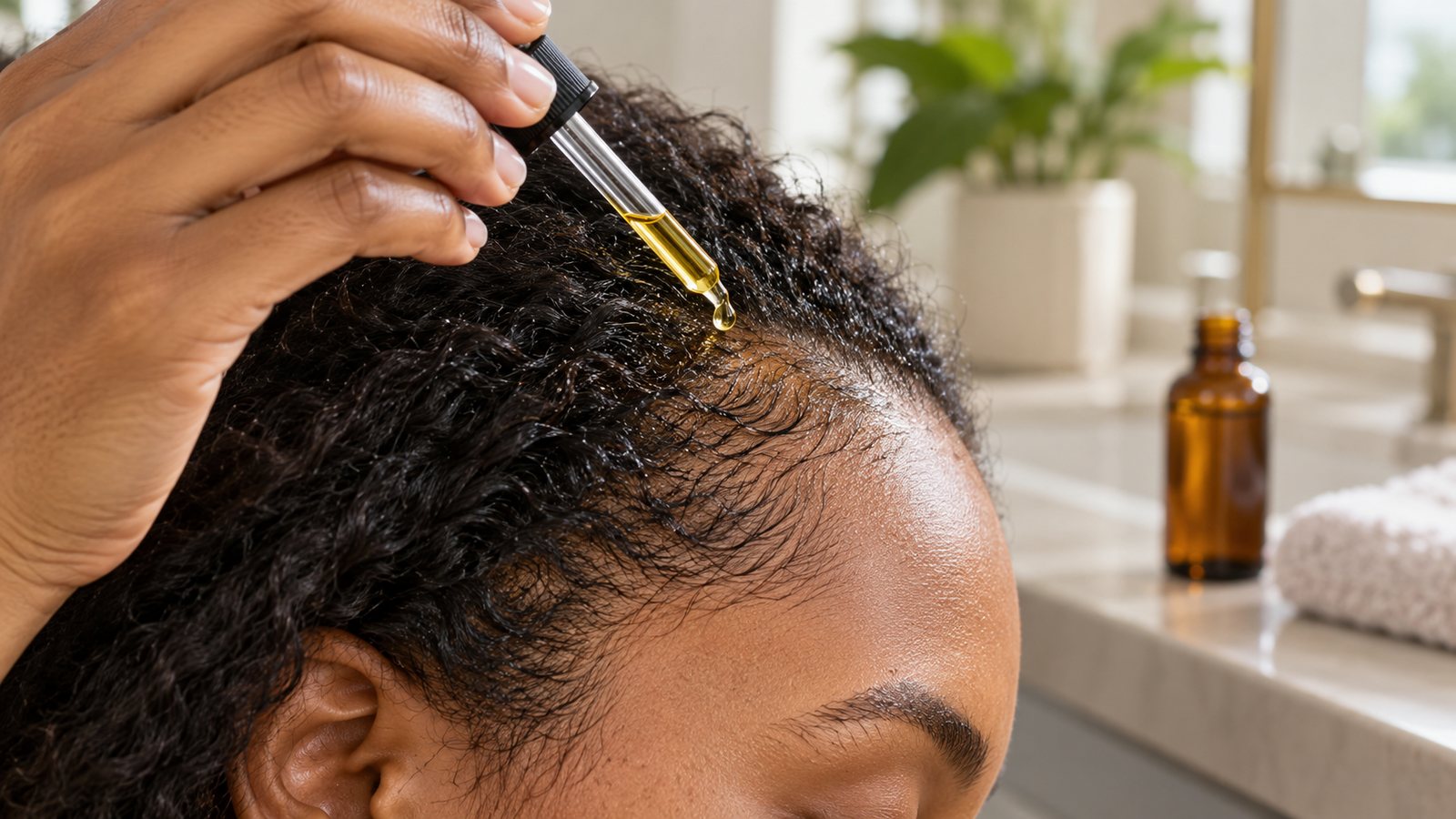
How People Apply Oil to the Hairline: Massage, Hot Oil and Leave-In
The methods differ in technique, in how long the oil stays on and in whether you rinse it.
- Massage. You work the oil along the hairline with your fingertips or a scalp massager. Real Simple says scalp massagers increase blood flow in the scalp, which it says supports hair growth. That claim is about blood flow, not a measured change in a hairline.
- Hot oil wrap. Evan Alexander Grooming, a grooming brand, describes wrapping the head in a warm towel and leaving the oil on for 30 minutes before rinsing. The brand gives that time “to allow deep oil penetration.” It is a suggested time, not a safety limit.
- Leave-in. The same brand says to dilute a few drops of oil in carrier oil or water, spray it on the hairline and leave it in without rinsing. If it’s an essential oil, dilute it in a carrier oil, as check 2 below says.
Six Checks Before You Put Oil on Your Hairline
Do these before the first use. They keep pure essential oil off your skin and catch a reaction on a small patch first.
- Read the label. Check whether the bottle holds an essential oil or a carrier oil. Xyon Health links safe scalp use to that difference.
- Dilute any essential oil. Mix it into a carrier oil before it touches skin, because Xyon Health warns against applying pure essential oils.
- Patch test first. Evan Alexander Grooming advises you to “perform a patch test on a small skin area” before using an oil.
- Stop at irritation or a rash. The NCCIH note cited by Healthline names both as possible reactions to peppermint oil.
- Check who was studied. Use the table above. A result in mice, on detached strands or in a blend hasn’t shown what one oil does on a human hairline.
- See a dermatologist if a warning sign appears. Padra’s list, set out further down this page, names the signs that call for more than an oil.
Most Oil Lists Here Are Also Shopping Pages: Check the Study
Hims, a telehealth (online care) company that sells hair loss treatments, says on its own blog that hair oils might be useful but more research is needed. It adds that “the keyword here is might.”
Four other sources have a stake too:
- Byrdie’s list of 14 hair growth oils says it may receive compensation when readers click its links.
- Padra, whose warning signs appear below, runs hair transplant and platelet-rich plasma (PRP) clinics, per the menu on its guide.
- Xyon Health’s guide page has a shopping cart that lists its SiloxysSystem Gel.
- Evan Alexander Grooming, whose methods appear above, is a grooming brand.
None of this makes a list wrong. It means these lists double as shopping pages, so check the study behind each oil.
Signs a Receding Hairline Needs a Dermatologist, Not an Oil
Padra’s guide lists hair loss signs to take seriously. Its list includes these three:
- Heavy shedding that keeps going for more than a few weeks.
- A thinning crown or a noticeably receding hairline.
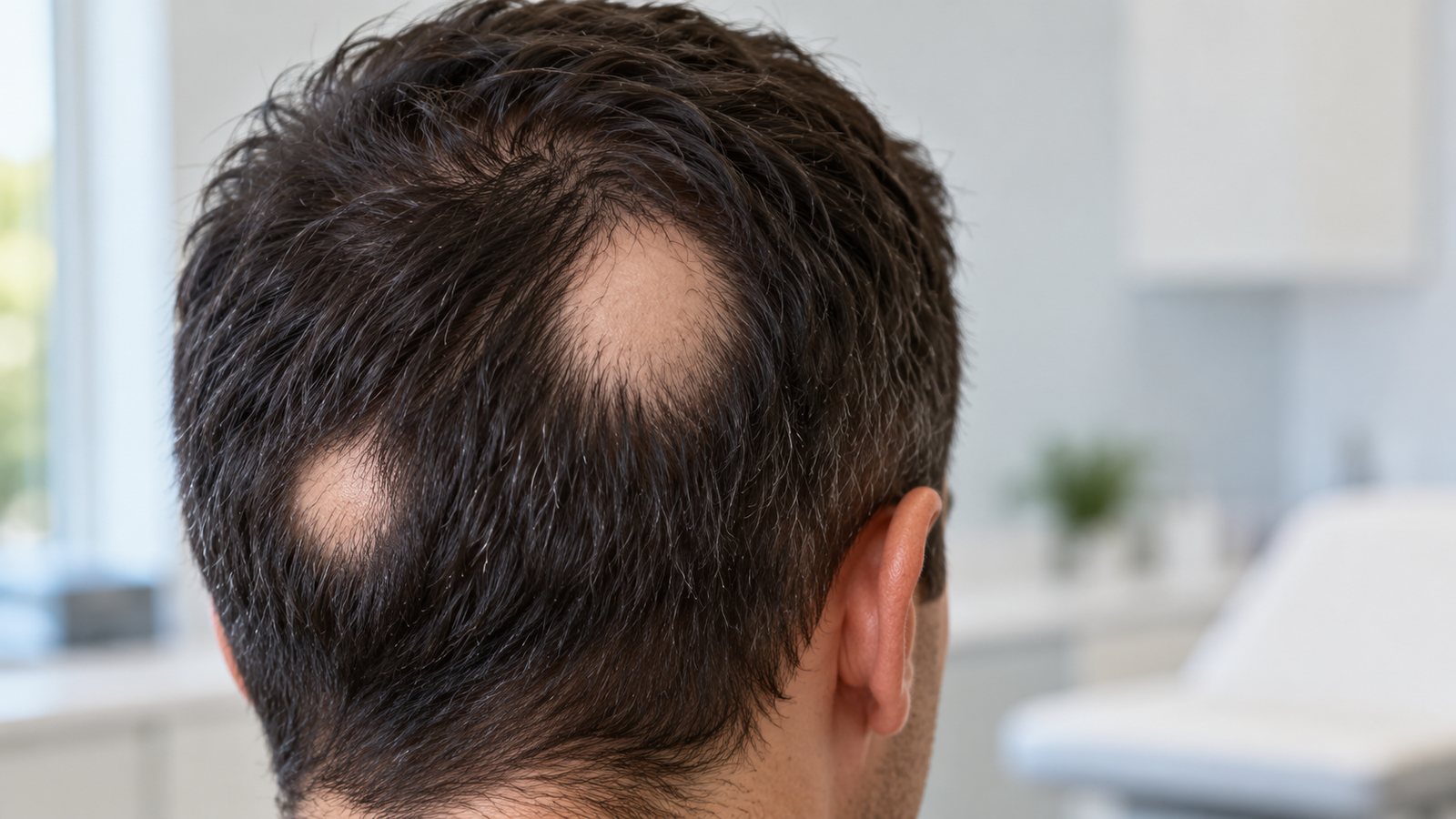
- Sudden round patches or bald spots.
See a dermatologist if any of the three applies. They can look for the cause and go over medicines this site covers, such as finasteride for thinning hair and minoxidil. Bring the name of any oil you have used to the visit.
Next Step
Before you spend money on an oil, see how it compares with medicines and devices in hair loss treatments compared.
FAQ
Can an Oil Reverse a Receding Hairline?
Padra, which publishes its own oil guide, says oils “cannot reverse advanced genetic hair loss.” None of the studies in the table shows an oil doing it in people either.
What Is Hair Oiling?
It means putting oil on the scalp and hair. Evan Alexander Grooming warns that too much oil, or poor rinsing, leaves buildup that makes hair greasy and weighed down. It advises using oil sparingly.
How Long Should You Try an Oil?
Dermatologist Jeannette Graf, quoted by Byrdie, says any hair growth product, oils included, typically takes several months of consistent use to show results. That’s the wait before judging, not a promise.
This page summarizes published sources for general information and is not medical advice.
Sources
- https://www.healthline.com/health/essential-oils-for-hair-growth
- https://xyonhealth.com/blogs/library/best-oils-for-hair-growth
- https://evanalexandergrooming.com/blogs/the-den/oils-for-receding-hairline-natural-remedies-for-hairline-regrowth
- https://www.hims.com/blog/best-oils-for-hair-growth
- https://padra.com/mag/best-hair-growth-oil/
- https://www.byrdie.com/best-hair-growth-oils-8698928
- https://www.realsimple.com/best-oils-for-hair-growth-11914957